

Bluebeard
 1697
1697  France
 Story
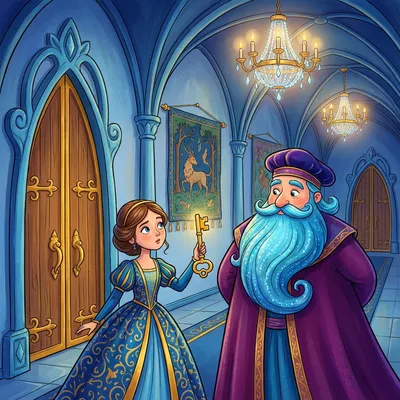
Once upon a time, there lived a wealthy nobleman with a beard so blue that everyone called him Bluebeard. He lived in a magnificent castle filled with treasures, but despite his wealth, he was lonely because people were frightened by his unusual appearance.
Bluebeard asked the two daughters of a neighboring lady to meet him. At first, both sisters were afraid. But after Bluebeard invited them to a wonderful party at his castle, the younger sister found him quite pleasant and agreed to marry him.
After the wedding, Bluebeard told his wife, "I must go on a journey. Here are the keys to every room in the castle. Open any door you wish, explore every chamber. But this small golden key opens a room in the cellar that you must never, ever enter."
At first, the wife enjoyed exploring the castle and its treasures. But the forbidden room haunted her curiosity. What could be so terrible that she couldn't see it? One day, she crept down to the cellar and unlocked the mysterious door.
Inside, she found evidence of Bluebeard's dark secret: he had not been a good man at all, and his previous wives had discovered this too late. Frightened, she dropped the golden key on the floor. When she picked it up, she saw that it was stained and could not be cleaned.
Bluebeard returned home early and immediately asked for his keys. When he saw the stained key, he knew what she had done. "You have betrayed my trust!" he thundered. "Now you must face the consequences!"
The young wife begged for time to say her prayers and sent word to her brothers, who were soldiers, to come quickly. Her sister Anne watched from the tower, hoping to see help coming.
Just as Bluebeard was about to punish his wife, her brothers arrived! They defeated the wicked Bluebeard and freed their sister. She inherited his wealth and lived happily ever after, eventually marrying a kind and honest man who treated her with love and respect.
History and Meaning
"Bluebeard" was written by Charles Perrault and published in 1697 in his famous collection "Tales of Mother Goose," which also included Cinderella and Sleeping Beauty.
The tale is one of the darker fairy tales and has been interpreted in many ways over the centuries. Some see it as a warning about curiosity, while others view it as a story about the dangers of secrets in marriage.
The forbidden room is a classic fairy tale motif, similar to Pandora's box in Greek mythology or the forbidden fruit in the Garden of Eden. These stories explore human curiosity and the sometimes dangerous consequences of seeking forbidden knowledge.
Modern adaptations often emphasize the bravery of the wife, who ultimately survives through her own quick thinking and her family's loyalty. The tale has inspired operas, films, and countless retellings that explore its themes of trust, curiosity, and the importance of family bonds.