

For Want of a Nail

Lyrics
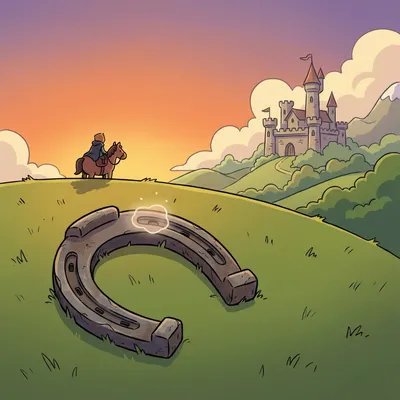
For want of a nail the shoe was lost.For want of a shoe the horse was lost.For want of a horse the rider was lost.For want of a rider the message was lost.For want of a message the battle was lost.For want of a battle the kingdom was lost.And all for the want of a horseshoe nail.
History and Meaning
"For Want of a Nail" is a proverb in verse form that illustrates how small, seemingly insignificant events can set off a chain reaction leading to major consequences. It is one of the earliest expressions of what is now known as the Law of Unintended Consequences.
How old is this proverb?
The rhyme dates back to at least the 14th century. An early version appears in a manuscript from around 1390, and the concept may be older still. The proverb gained wider circulation when it was included in George Herbert's 1640 collection "Jacula Prudentum" (Outlandish Proverbs). Benjamin Franklin later popularised a version in his "Poor Richard's Almanack" in 1758, making it a well-known part of English-language wisdom literature.
Most cultures have some version of the idea that neglecting small details can lead to disaster.
What does the rhyme teach?
The rhyme traces a chain of cause and effect: for want of a nail, a horseshoe is lost; for want of a shoe, a horse is lost; for want of a horse, a rider is lost; for want of a rider, a message is lost; for want of a message, a battle is lost; and for want of a battle, a kingdom is lost. All because someone failed to replace a single nail.
The lesson is about responsibility and attention to detail. Small acts of negligence can compound into serious consequences. The rhyme has been used for centuries to teach children the importance of taking care of small tasks before they become big problems.
Has it been connected to real events?
Historians and storytellers have linked the proverb to various real battles, though none of these connections are confirmed. One popular association is with the Battle of Bosworth Field in 1485, where Richard III allegedly lost his horse during the fighting, echoing Shakespeare's famous line "A horse! A horse! My kingdom for a horse!" Whether the proverb inspired the literary tradition or the other way around is unclear.
Why is it still relevant?
The concept behind "For Want of a Nail" appears throughout modern life. Engineers, military strategists, and risk analysts all study how small failures can cascade into major disasters, from the O-ring failure that caused the Space Shuttle Challenger explosion to software bugs that bring down entire systems. The proverb remains a powerful reminder that details matter, and that the cost of prevention is almost always less than the cost of failure.
Lyrics from nurseryrhymes.info