

Ah! Vous dirai-je, maman
 France
 French Nursery Rhyme
Original Lyrics
Ce qui cause mon tourment.
Papa veut que je raisonne,
Comme une grande personne.
Moi, je dis que les bonbons
Valent mieux que la raison.
English Translation
What is causing my torment?
Papa wants me to reason
Like a grown-up person.
But I say that candies
Are worth more than reason.
Translation Notes
Vocabulary
bonbons — candies, sweets (from the French "bon" meaning "good")
tourment — torment, anguish (the child's dramatic description of inner conflict)
raisonne — to reason, to think rationally (from "raison," meaning reason)
grande personne — literally "big person," the French term for an adult or grown-up
la raison — reason (both the faculty of reasoning and what is considered reasonable)
Grammar Notes
The Subjunctive Mood: "Papa veut que je raisonne" perfectly demonstrates the French subjunctive. After verbs of wishing, wanting, or commanding (like "veut que" - wants that), French requires the subjunctive mood in the dependent clause. Here, "raisonne" is in the subjunctive, differing from the indicative "raisonne."
Question Inversion: "Vous dirai-je" (Shall I tell you) shows the formal question structure through verb-subject inversion. While modern spoken French often uses "est-ce que" or rising intonation for questions, this inverted form remains common in songs, literature, and formal registers.
Formal Address: The use of "vous" when addressing one's mother reflects the more formal parent-child relationships common in 18th-century French society, quite different from modern French families where "tu" would be standard.
History and Meaning
"Ah! vous dirai-je, Maman" is one of the most remarkable songs in musical history—not because of its French lyrics, which are relatively unknown outside French-speaking regions, but because its melody has become one of the most recognizable tunes in the entire world. Known globally as "Twinkle, Twinkle, Little Star" in English and the "Alphabet Song" in countless languages, this 18th-century French romance has transcended its origins to become a truly universal melody. The original French lyrics tell a charming story of a child's rebellion: preferring candy over the grown-up virtue of reason.
Origins
The melody originated as an anonymous French pastoral tune around 1740, circulating orally before being captured in print. The tune first appeared in published form in 1761 in a keyboard collection titled "Les Amusements d'une Heure et Demy" (The Amusements of an Hour and a Half), though this publication contained only the melody without lyrics.
The first publication pairing this famous melody with lyrics came in 1774, when it appeared in volume two of Charles de Lusse's "Recueil de Romances" (Collection of Ballads), published in Brussels. These early lyrics were titled "La Confidence naïve" (The Naive Confession), which eventually evolved into the version beginning with "Ah! vous dirai-je, Maman."
While the song originated as a sentimental romance for adults, its simple, memorable melody and endearing sentiment quickly made it a favorite for children, cementing its place in French childhood culture.
Meaning & Interpretation
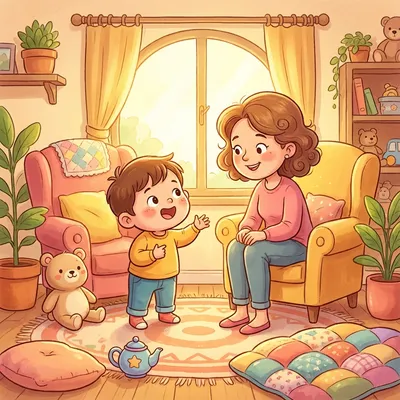
The French lyrics present a delightfully honest child's perspective on the conflict between adult expectations and childhood desires. The child confides in their mother about the "torment" they're experiencing: Papa wants them to "reason like a grown-up," but the child concludes that "candies are worth more than reason" (Les bonbons valent mieux que la raison).
This charming declaration of priorities captures the universal experience of childhood—the tension between what adults value (rationality, maturity) and what children instinctively prefer (sweetness, immediate pleasure). The dramatic language ("ce qui cause mon tourment"—what causes my torment) adds a humorous element, as the child treats this philosophical conflict with the gravity of a serious dilemma.
Cultural Significance
What makes "Ah! vous dirai-je, Maman" truly extraordinary is the disparity between its French cultural footprint and its global melodic dominance. The original French lyrics remain a charming piece of French childhood heritage, but it's the melody that achieved immortality.
The tune has been adapted into children's songs across virtually every language and culture, making it arguably the most universal melody in human history. The contrast between the French original (candy beats reason) and the English "Twinkle, Twinkle, Little Star" (wonder at the cosmos) demonstrates how the same musical foundation can carry entirely different cultural messages—one celebrating childish rebellion, the other encouraging celestial curiosity.
Mozart's Variations
In 1781 or 1782, Wolfgang Amadeus Mozart—then approximately 25 years old—composed his famous "Twelve Variations on 'Ah vous dirai-je, Maman'" (K. 265/300e) for solo piano. This work helped immortalize the melody in classical music repertoire and showcased the tune's remarkable musical versatility.
Mozart's variations were first published in Vienna in 1785 and have remained a beloved staple of piano literature ever since. The work demonstrates how a simple folk melody can serve as the foundation for sophisticated musical exploration, transforming a children's tune into a vehicle for virtuosic display and creative variation.
International Adaptations
The melody's journey around the world has produced countless adaptations:
- English: "Twinkle, Twinkle, Little Star" (1806, poem by Jane Taylor)
- English: "Baa, Baa, Black Sheep" (another English nursery rhyme using the same melody)
- English: "The Alphabet Song" / "ABC Song"
- German: "Morgen kommt der Weihnachtsmann" (Tomorrow Comes Santa Claus)
- German: "Das Alphabet-Lied" (The Alphabet Song)
Each culture has found different uses for this infinitely adaptable melody, demonstrating its unique power to transcend linguistic and cultural boundaries.