
Chanda Mama Dur Ke
 India
India Hindi Nursery Rhyme
Original Lyrics
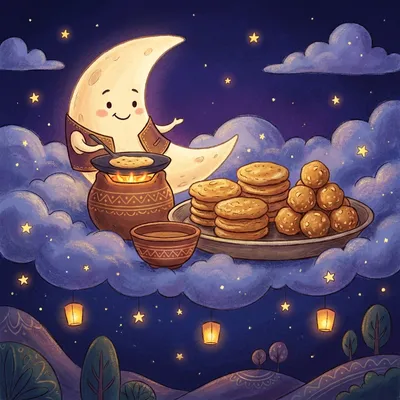
चंदा मामा दूर के,
पुए पकाएं बूर के।
आप खाएं थाली में,
मुन्ने को दें प्याली में।
Romanized (Latin script):
Chanda mama dur ke,
Pue pakayen boor ke.
Aap khayen thaali mein,
Munne ko den pyaali mein.
English Translation
Cooking sweet cakes of crushed sugarcane.
You eat from a big plate,
Give the little one a small bowl.
Translation Notes
Translation
चंदा मामा (Chanda mama) = Moon Uncle - चंदा (chanda) = moon (affectionate term) - मामा (mama) = maternal uncle
दूर के (dur ke) = far away पुए (pue) = sweet cakes/fritters पकाएं (pakayen) = cook/prepare बूर के (boor ke) = of crushed sugarcane mixture
आप (aap) = you (respectful) खाएं (khayen) = eat थाली में (thaali mein) = in a plate/platter मुन्ने को (munne ko) = to the little one दें (den) = give प्याली में (pyaali mein) = in a bowl/cup
Translation
चंदा मामा (Chanda mama) = Moon Uncle - चंदा (chanda) = moon (affectionate term) - मामा (mama) = maternal uncle
दूर के (dur ke) = far away पुए (pue) = sweet cakes/fritters पकाएं (pakayen) = cook/prepare बूर के (boor ke) = of crushed sugarcane mixture
आप (aap) = you (respectful) खाएं (khayen) = eat थाली में (thaali mein) = in a plate/platter मुन्ने को (munne ko) = to the little one दें (den) = give प्याली में (pyaali mein) = in a bowl/cup
History and Meaning
"Chanda Mama Dur Ke" (चंदा मामा दूर के) is one of the most cherished Hindi lullabies and nursery rhymes, sung to Indian children for generations. The title translates to "Moon Uncle Far Away," and the song beautifully personifies the moon as a loving maternal uncle.
Cultural Significance of "Mama"
In Indian culture, the maternal uncle (मामा/mama) holds a special place in family relationships. Traditionally seen as an indulgent figure who brings gifts and shows special affection to nieces and nephews, the mama is often associated with treats, fun, and unconditional love. By personifying the moon as "Chanda Mama," the lullaby creates an immediate warm, familial connection that resonates deeply with Indian children.
The Moon in Indian Tradition
The moon has held a special place in Indian culture, literature, and spirituality for millennia. It appears frequently in Sanskrit poetry, classical music, and folk traditions. The gentle, soothing light of the moon makes it a natural subject for lullabies, and "Chanda Mama" represents this cultural connection in a form accessible to even the youngest children.
Purpose and Usage
"Chanda Mama Dur Ke" serves multiple purposes in Indian households:
-
Bedtime Lullaby: Parents sing it to soothe children to sleep, the gentle rhythm and familiar words creating a calming effect.
-
Moon Introduction: It helps children learn about the moon and understand that it is far away in the sky.
-
Encouraging Milk Drinking: Parents often use the promised treats from Chanda Mama (the sweet cakes and milk) as an incentive for children to drink their own milk.
-
Teaching Values: Extended versions of the song include themes of fairness, sharing, and dealing with disappointment when things don't go as expected.
Symbolism and Deeper Meaning
Beyond its literal interpretation, the moon can symbolize distant aspirations or seemingly unattainable goals that, with persistence and effort, can be achieved. The moon's distance becomes a metaphor for dreams that children can work toward reaching.
The song remains one of the most universally recognized Hindi lullabies, connecting generations of Indian families through its simple melody and endearing portrayal of the moon as a beloved family member.
Cultural Context
In Indian culture, mama (maternal uncle) is traditionally seen as an affectionate figure who brings gifts and treats to nieces and nephews. The moon is lovingly personified as "Chanda Mama" (Moon Uncle), creating a warm, familial connection with the celestial body.
The song playfully suggests inequality - the Moon Uncle eats from a big plate while giving the child only a small bowl - which often leads to the child expressing disappointment in extended verses. This teaches children about fairness and sharing in a gentle, humorous way.