

Ek Kauwa Pyasa Tha
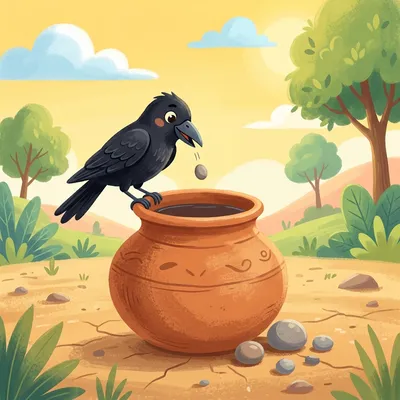

Hindi Nursery Rhyme
Original Lyrics
Hindi script
एक कौआ प्यासा था,घड़े में पानी थोड़ा था।कौए ने कंकड़ डाले,पानी ऊपर आया।कौए ने पानी पिया,और उड़कर चला गया।
Romanized (pronunciation)
Ek kauwa pyaasa tha,Ghade mein paani thoda tha.Kauwe ne kankar daale,Paani upar aaya.Kauwe ne paani piya,Aur udkar chala gaya.
English Translation
A crow was thirsty,There was little water in the pot.The crow dropped in pebbles,The water came up.The crow drank the water,And flew away.
Translation Notes
Vocabulary
कौआ (kauwa) - crow प्यासा (pyaasa) - thirsty घड़ा (ghada) - earthen water pot पानी (paani) - water थोड़ा (thoda) - a little, small amount कंकड़ (kankar) - pebbles, small stones ऊपर (upar) - up, upward उड़कर (udkar) - having flown
Grammar Notes
The "ne" construction: in kauwe ne kankar daale (the crow dropped pebbles) and kauwe ne paani piya (the crow drank the water), the doer kauwe takes the marker ne. For completed past actions of many verbs, Hindi tags the subject this way, an ergative pattern learners meet early.
Past tense with "tha": pyaasa tha (was thirsty) and thoda tha (was little) use tha ("was") to set the scene in the past.
Conjunctive participle "udkar": udkar chala gaya means "having flown, went away," that is, "flew off." The -kar ending chains the flying to the leaving.
Line-by-Line Translation
एक कौआ प्यासा था (Ek kauwa pyaasa tha) - "A crow was thirsty"
- एक (ek) = one, a
- कौआ (kauwa) = crow
- प्यासा था (pyaasa tha) = was thirsty
घड़े में पानी थोड़ा था (Ghade mein paani thoda tha) - "There was little water in the pot"
- घड़े में (ghade mein) = in the pot
- पानी थोड़ा (paani thoda) = little water
कौए ने कंकड़ डाले (Kauwe ne kankar daale) - "The crow dropped in pebbles"
- कंकड़ (kankar) = pebbles
- डाले (daale) = put in, dropped
पानी ऊपर आया (Paani upar aaya) - "The water came up"
- ऊपर आया (upar aaya) = rose, came up
कौए ने पानी पिया (Kauwe ne paani piya) - "The crow drank the water"
- पिया (piya) = drank
और उड़कर चला गया (Aur udkar chala gaya) - "And flew away"
- उड़कर (udkar) = having flown
- चला गया (chala gaya) = went away
History and Meaning
"Ek Kauwa Pyasa Tha" retells the old fable of the thirsty crow as a six-line Hindi rhyme. A crow finds a pot with too little water to reach, so it drops pebbles in one by one until the level rises high enough to drink. It is usually a child's first lesson that thinking your way out of a problem beats giving up.
Origins
The verse is a Hindi rendering of the thirsty-crow story credited to Aesop, which reached India through school readers and moral-story collections and settled into the oral rhyme tradition. There is no single fixed text: because it is retold constantly, the exact wording varies from book to book, though the sequence of events, thirst, pebbles, rising water, a drink, and flight, stays the same. The version here follows the common schoolbook form.
Meaning & Interpretation
The rhyme is a small problem-solving story. The crow cannot change the pot or make more water appear, so it changes what it can, adding pebbles to lift the water within reach. Teachers use it to talk about patience and cleverness, since the bird succeeds by trying a steady, sensible idea rather than by force.
What story is Ek Kauwa Pyasa Tha based on?
It is based on "The Crow and the Pitcher," one of Aesop's fables. The Hindi rhyme keeps the fable's core, a thirsty crow raising water with dropped stones, and compresses it into a few rhyming lines suitable for very young children.
What does the thirsty crow teach children?
The lesson is that a calm, clever plan can solve a problem that first looks impossible. The crow does not panic or leave. It works patiently, one pebble at a time, until it can drink.
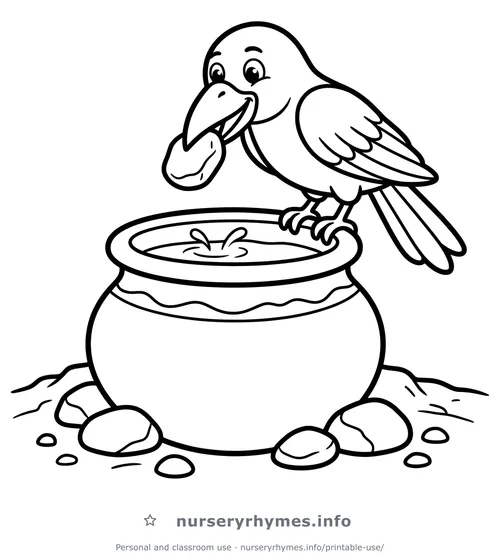
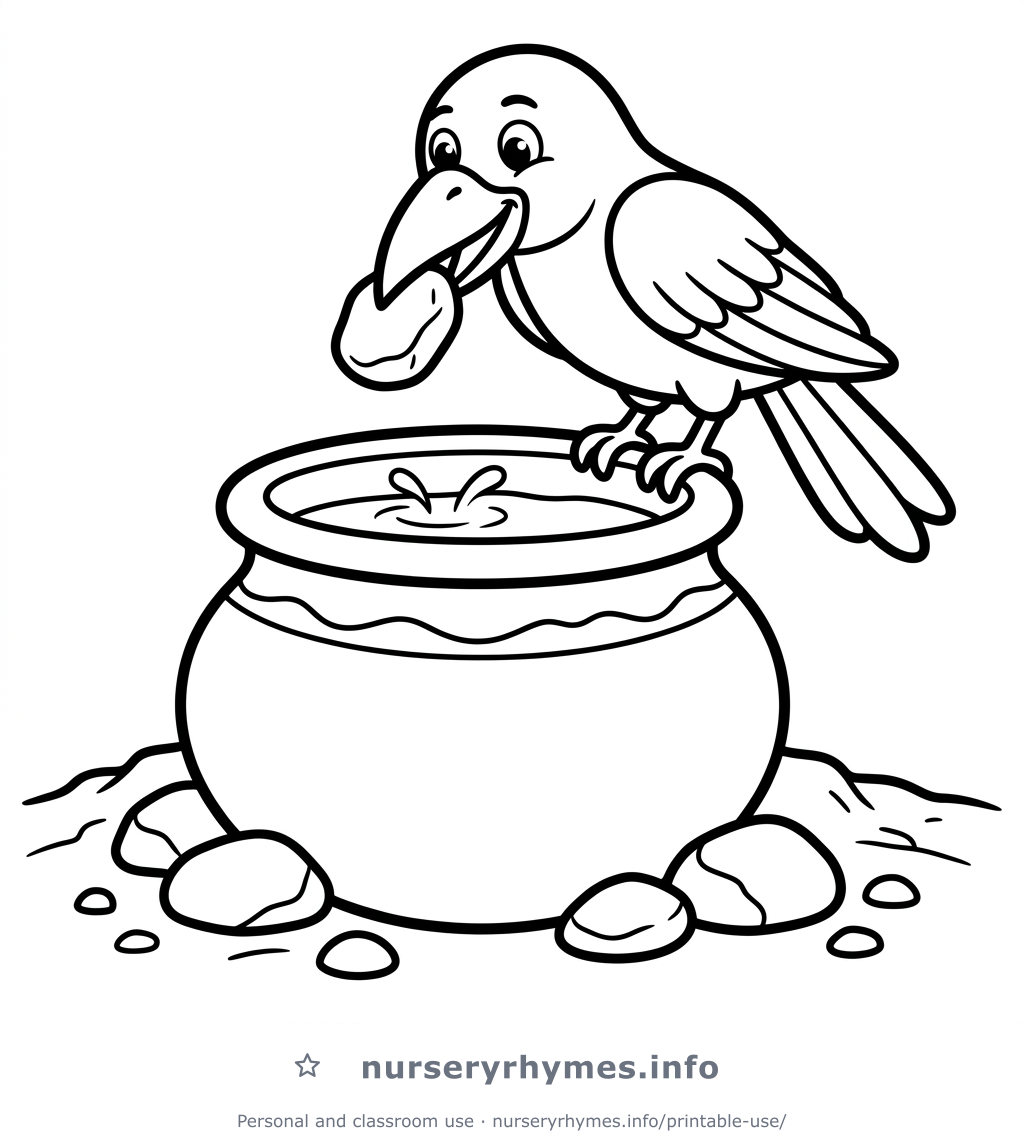
Free Printable Coloring Page
Print this Ek Kauwa Pyasa Tha coloring sheet for free and let little ones bring it to life with crayons or pencils.
Full-resolution PNG · Fits the paper size selected in your print dialog · Personal and classroom use
Lyrics from nurseryrhymes.info