

Machli Jal ki Rani Hai
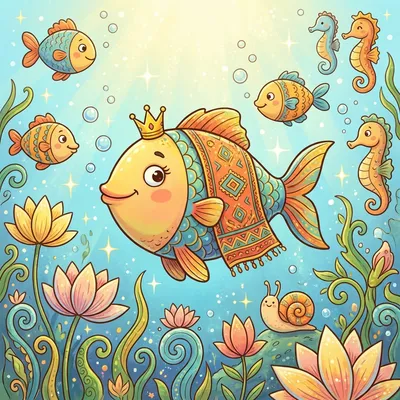
 India
India Hindi Nursery Rhyme
Original Lyrics
मछली जल की रानी है,
जीवन उसका पानी है।
हाथ लगाओ तो डर जाएगी,
बाहर निकालो तो मर जाएगी।
Romanized (Latin script):
Machli jal ki rani hai,
Jeevan uska pani hai.
Haath lagao toh dar jayegi,
Bahar nikalo toh mar jayegi.
English Translation
Water is her life.
If you touch her, she will get scared,
If you take her out of the water, she will die.
Translation Notes
Grammar Notes
Gender in Hindi: The verb endings change based on gender. "-egi" (जाएगी/jayegi) is the feminine future tense form because fish (मछली/machli) is grammatically feminine in Hindi.
की/के/का: These possessive markers change based on the gender and number of the noun they modify. "की" (ki) is used here because "रानी" (rani/queen) is feminine singular.
Line-by-Line Translation
मछली जल की रानी है (Machli jal ki rani hai) — "Fish is the queen of water" - मछली (machli) = fish - जल (jal) = water - की (ki) = of/belonging to - रानी (rani) = queen - है (hai) = is
जीवन उसका पानी है (Jeevan uska pani hai) — "Water is her life" - जीवन (jeevan) = life - उसका (uska) = her/his/its - पानी (pani) = water
हाथ लगाओ तो डर जाएगी (Haath lagao toh dar jayegi) — "If you touch her, she will get scared" - हाथ (haath) = hand - लगाओ (lagao) = touch/apply - तो (toh) = then/if - डर (dar) = fear/scared - जाएगी (jayegi) = will go/will become (feminine future tense)
बाहर निकालो तो मर जाएगी (Bahar nikalo toh mar jayegi) — "If you take her out, she will die" - बाहर (bahar) = outside/out - निकालो (nikalo) = take out/remove - मर (mar) = die/death - जाएगी (jayegi) = will go/will become
Line-by-Line Translation
मछली जल की रानी है (Machli jal ki rani hai) — "Fish is the queen of water" - मछली (machli) = fish - जल (jal) = water - की (ki) = of/belonging to - रानी (rani) = queen - है (hai) = is
जीवन उसका पानी है (Jeevan uska pani hai) — "Water is her life" - जीवन (jeevan) = life - उसका (uska) = her/his/its - पानी (pani) = water
हाथ लगाओ तो डर जाएगी (Haath lagao toh dar jayegi) — "If you touch her, she will get scared" - हाथ (haath) = hand - लगाओ (lagao) = touch/apply - तो (toh) = then/if - डर (dar) = fear/scared - जाएगी (jayegi) = will go/will become (feminine future tense)
बाहर निकालो तो मर जाएगी (Bahar nikalo toh mar jayegi) — "If you take her out, she will die" - बाहर (bahar) = outside/out - निकालो (nikalo) = take out/remove - मर (mar) = die/death - जाएगी (jayegi) = will go/will become
History and Meaning
"Machli Jal ki Rani Hai" (मछली जल की रानी है) is one of the most beloved and enduring Hindi nursery rhymes, known by generations of Indian children. The title translates to "Fish is the Queen of Water," and this simple yet profound rhyme has been a staple of early childhood education across Hindi-speaking regions of India for decades.
Cultural Significance
"Machli Jal ki Rani Hai" has become deeply ingrained in Indian childhood culture. The rhyme is known by slightly varied names including "Machli Jalki Rani Hai" and "Machhali Jal Ki Rani Hai," but the core message remains consistent across all versions.
The personification of the fish as a "queen" (रानी/rani) is particularly meaningful in Indian culture, elevating the status of even a small creature and teaching children to view all life with respect and dignity. This perspective aligns with traditional Indian values that emphasize the interconnectedness of all living beings.
Educational Purpose
Beyond its catchy melody and simple lyrics, "Machli Jal ki Rani Hai" serves multiple educational purposes. The rhyme is often used by teachers and parents to:
-
Introduce Aquatic Life: The poem sparks children's curiosity about fish and marine ecosystems, providing a gateway to learn about different types of fish and underwater habitats.
-
Teach Ecological Concepts: It highlights the delicate balance in nature and emphasizes how vital water is for aquatic life, introducing environmental awareness from an early age.
-
Develop Empathy: By describing how fish get scared when touched and die when removed from water, the rhyme helps children develop empathy for living creatures and understand the importance of respecting animal habitats.
-
Build Language Skills: The simple vocabulary and repetitive structure aid in language development, helping children learn new Hindi words while improving their pronunciation and memory.
Origins and Author
The poem "Machli Jal Ki Rani Hai" was originally written in the 1950s by Mr. Ramesh Bhai, the founder of Bal Mandir School in Shakti Nagar, Delhi, which was established in 1953. Ramesh Bhai was a dedicated educator who understood the power of simple, memorable verses in teaching young children important concepts about nature and the world around them.
The rhyme, along with many other four-line poems created by Ramesh Bhai, was published in the book "Aayo Gaya Geet" and became widely distributed through pre-school educational kits. Major Indian publishers such as Lotpot and Mayapuri printed the rhyme, contributing to its widespread popularity across India.
Metaphorical Interpretations
While primarily understood as a children's educational rhyme about fish and their habitat, some scholars and educators have noted deeper metaphorical meanings. The fish in its water can be seen as representing individuals in their comfort zones or familiar environments - when disturbed or removed from what they know, they experience fear and distress. This interpretation adds layers of meaning that can resonate with older children and adults while maintaining its charm for young learners.
Legacy
For over 70 years, "Machli Jal ki Rani Hai" has continued to bring joy to Indian children while teaching important lessons about respecting nature and understanding the needs of different creatures. Its enduring popularity is a testament to Ramesh Bhai's skill in crafting simple yet meaningful verses that resonate across generations.
Cultural and Educational Value
This rhyme introduces children to aquatic life and teaches an important lesson about respecting living creatures and understanding their needs. The simple yet powerful message that fish need water to survive helps children understand the concept of habitat and environmental needs of different creatures.