

Titli Udi


Hindi Nursery Rhyme
Original Lyrics
Hindi script
तितली उड़ी,बस में चढ़ी।सीट न मिली,तो रोने लगी।
Romanized (pronunciation)
Titli udi,Bus mein chadhi.Seat na mili,To rone lagi.
English Translation
The butterfly flew up,Climbed onto the bus.It got no seat,So it began to cry.
Translation Notes
Vocabulary
तितली (titli) - butterfly उड़ी (udi) - flew बस (bus) - bus (borrowed from English) चढ़ी (chadhi) - climbed, boarded सीट (seat) - seat (borrowed from English) मिली (mili) - got, was found रोने (rone) - to cry लगी (lagi) - began
Grammar Notes
Feminine past tense: because titli (butterfly) is grammatically feminine, all its verbs take the -i ending: udi (flew), chadhi (climbed), mili (got). A masculine subject would use -a endings instead. The tight rhyme is a side effect of this grammar.
Negation with "na": seat na mili means "no seat was found." Placing na before the verb cancels the action, similar to English "not."
Inceptive "lagi": rone lagi means "began to cry." Pairing a verb (in the -ne form) with lagna marks the start of an action, a standard way in Hindi to say someone "started to" do something.
Language Notes
English loanwords: bus and seat entered Hindi during and after the British period and are now completely ordinary spoken Hindi. Everyday Hindi is full of such borrowings, and this rhyme is a gentle first example for young learners.
Line-by-Line Translation
तितली उड़ी (Titli udi) - "The butterfly flew up"
- तितली (titli) = butterfly
- उड़ी (udi) = flew (feminine past)
बस में चढ़ी (Bus mein chadhi) - "Climbed onto the bus"
- बस में (bus mein) = onto the bus
- चढ़ी (chadhi) = climbed, boarded
सीट न मिली (Seat na mili) - "It got no seat"
- सीट (seat) = seat
- न मिली (na mili) = did not get
तो रोने लगी (To rone lagi) - "So it began to cry"
- तो (to) = so, then
- रोने लगी (rone lagi) = began to cry
History and Meaning
"Titli Udi" packs a whole comic scene into four short lines: a butterfly flies up, hops on a city bus, finds no empty seat, and bursts into tears. The joke is the mismatch. A creature that can fly anywhere is defeated by a crowded bus, a frustration every child who has stood on public transport recognises.
Two of the words, bus and seat, are English borrowed straight into Hindi, which is one reason the rhyme feels modern and travels so well.
Origins
"Titli Udi" is a playground and preschool rhyme with no recorded author. It spread through classrooms and, more recently, children's video channels, which helped fix this short version in place. Because it lives in oral tradition, longer and sillier continuations exist, but the four-line bus joke is the one children chant.
Meaning & Interpretation
The rhyme works because it drops a delicate, free-flying insect into an ordinary human annoyance. The butterfly does everything right, it flies and it boards, and still gets stuck standing. Ending on the butterfly's tears gives toddlers a feeling they know well, and the quick rhyme keeps the whole thing light and funny rather than sad.
Why is Titli Udi so popular with young children?
It is short, it rhymes tightly (udi, chadhi, mili, lagi), and it tells a complete story in four lines. The everyday setting of a bus, plus two English words children already recognise, make it easy to memorise and act out with flying hands and a pretend sulk at the end.
What does Titli Udi teach?
Beyond the fun, it introduces feminine past-tense verb endings in Hindi and shows how English words like bus and seat have become part of everyday Hindi speech.
Free Printable Coloring Page
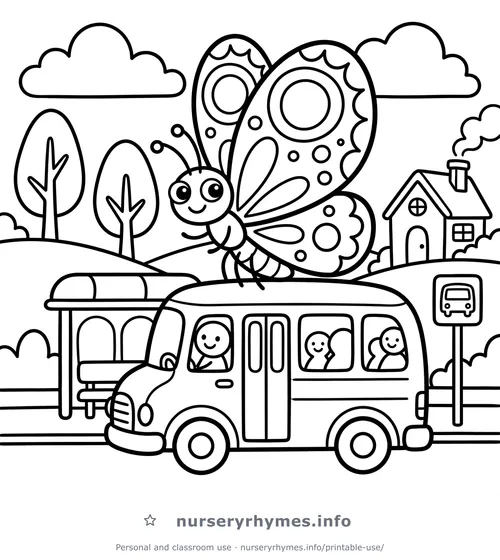
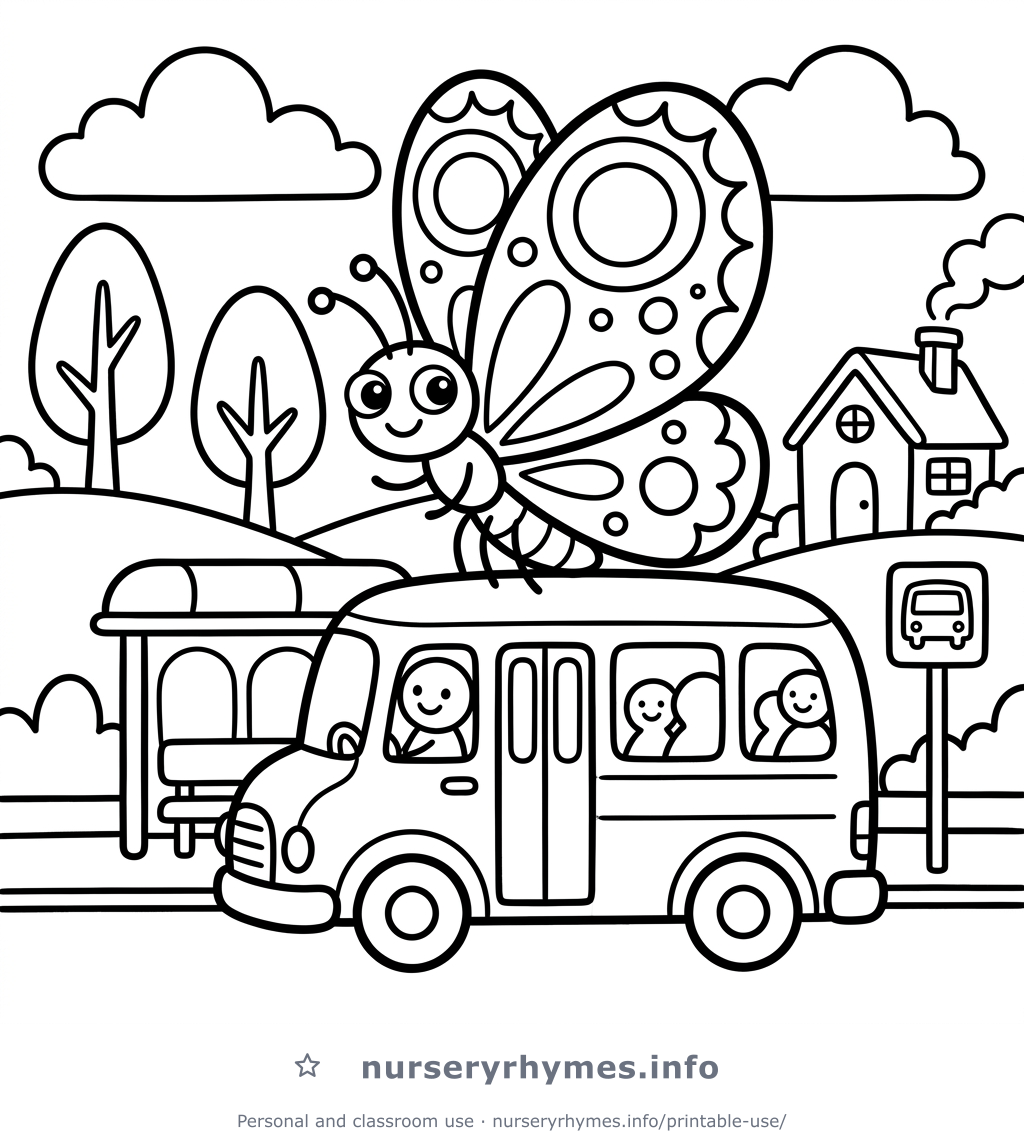
Print this Titli Udi coloring sheet for free and let little ones bring it to life with crayons or pencils.
Full-resolution PNG · Fits the paper size selected in your print dialog · Personal and classroom use
Lyrics from nurseryrhymes.info