
Hot Cross Buns


Lyrics
Hot cross buns!Hot cross buns!One a penny, two a penny,Hot cross buns!
If you have no daughters,Give them to your sons.One a penny, two a penny,Hot cross buns!
History and Meaning
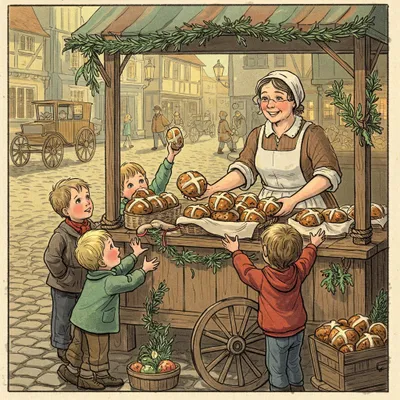
"Hot Cross Buns" is a traditional English nursery rhyme and street cry that is deeply associated with Easter and Good Friday celebrations. Famously known by school children as one of the first songs learned on the recorder, this short tune started as a practical marketing cry used by street vendors selling warm spiced buns in the bustling markets of London.
The simple lyrics and catchy rhythm made it easy for sellers to attract customers in crowded streets.
Origins
The song began as a commercial cry in eighteenth-century England. The earliest documented version was printed in Poor Robin's Almanack in 1733. The text read: "Good Friday comes this month, the old woman runs, with one a penny, two a penny, hot cross buns." A later printing appeared in 1797 in Christmas Box, but the 1733 reference is the earliest verified record. The street cry was eventually set to a simple melody that has survived for nearly three centuries.
Meaning & Interpretation
The lyrics directly reflect the daily life and commerce of London. The phrase "One a penny, two a penny" was a call out of the price, indicating that customers could buy one large bun or two smaller ones for a single copper penny. The line advising parents to give the buns to their sons if they had no daughters highlights the traditional family structure of the time, suggesting that these special holiday treats were meant for everyone to enjoy. In 1592, during the reign of Queen Elizabeth I, the London Clerk of the Markets forbade the sale of spiced buns except on Good Friday, at Christmas, and for burials. This restriction made hot cross buns a highly anticipated seasonal treat.
What is the origin of Hot Cross Buns?
The rhyme originated as an eighteenth-century street vendor's cry in London. It was first recorded in writing in 1733 in Poor Robin's Almanack, used by sellers to advertise their spiced buns on Good Friday.
Why do we eat hot cross buns on Good Friday?
Hot cross buns are traditionally eaten on Good Friday to mark the end of Lent. The cross on top of the bun represents the crucifixion of Jesus Christ, while the spices used in the dough symbolize the spices used for his burial.
Music Video
If the player is unavailable, watch this video on YouTube.
Free Printable Coloring Page
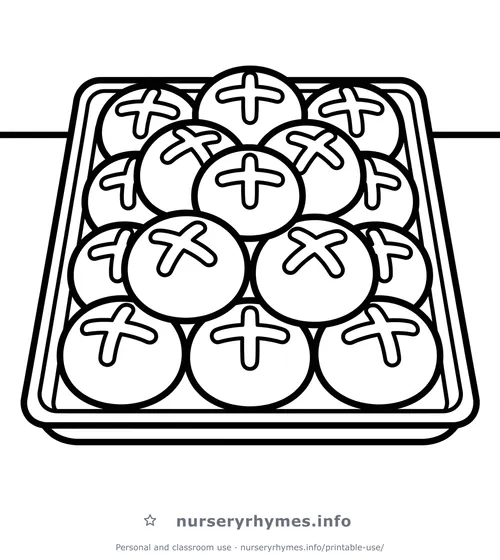
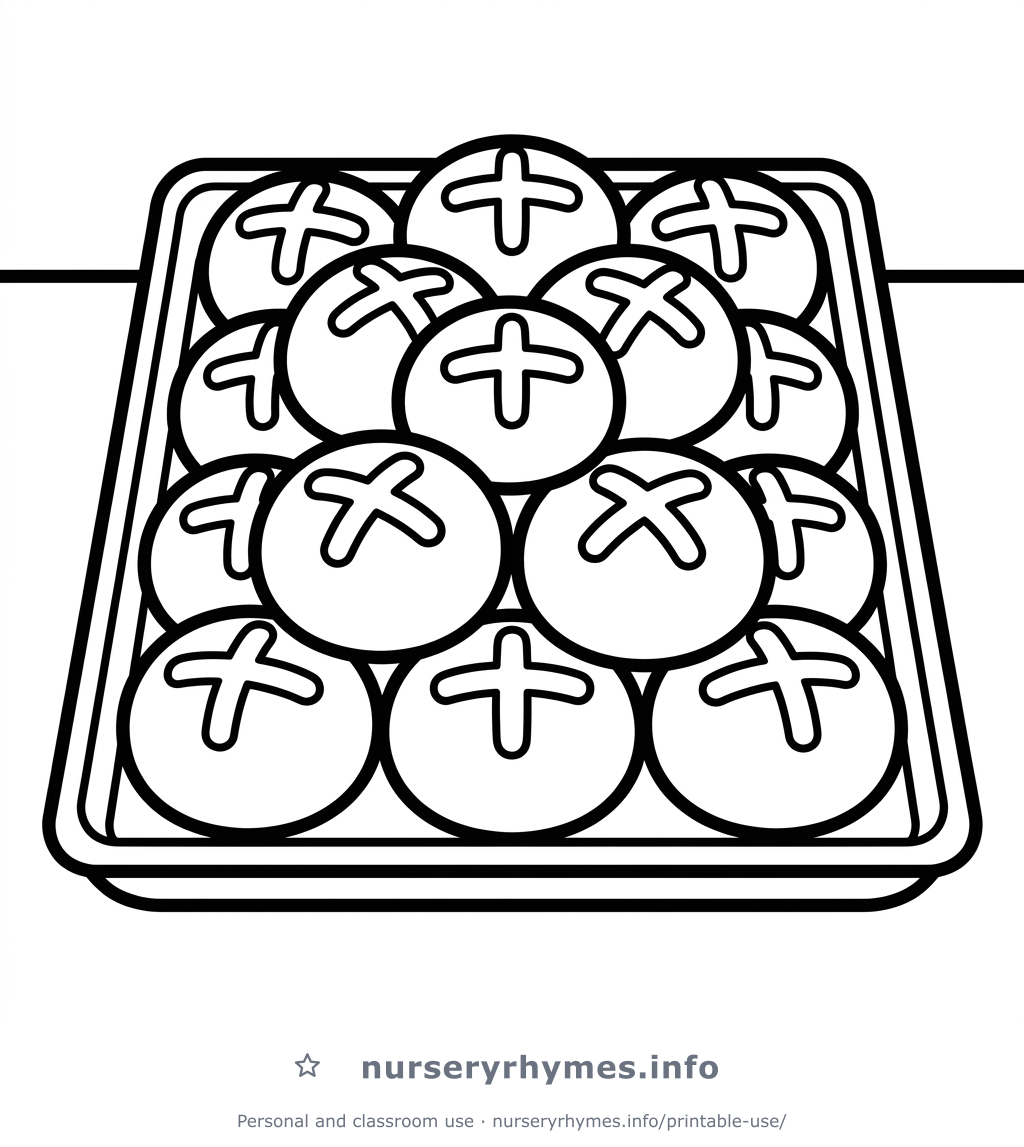
Print this Hot Cross Buns coloring sheet for free and let little ones bring it to life with crayons or pencils.
Full-resolution PNG · Fits the paper size selected in your print dialog · Personal and classroom use
Lyrics from nurseryrhymes.info