

I Had a Little Nut Tree
 1789
1789  England
 Lyrics
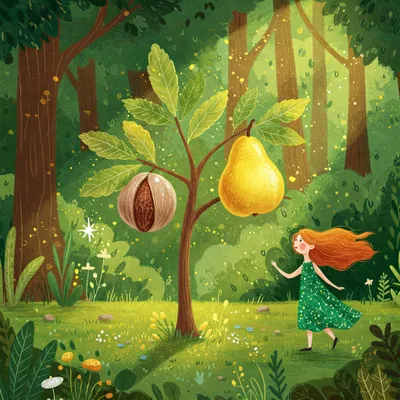
Nothing would it bear,
But a silver nutmeg
And a golden pear;
The King of Spain's daughter
Came to visit me,
And all for the sake
Of my little nut tree.
Her dress was made of crimson,
Jet black was her hair,
She asked me for my nutmeg
And my golden pear.
I said, "So fair a princess
Never did I see,
I'll give you all the fruit
From my little nut tree."
History and Meaning
"I Had a Little Nut Tree" is an English nursery rhyme believed to commemorate a historic royal visit to England in the late 15th century.
The Spanish Princess Theory
The most widely accepted interpretation connects this rhyme to the visit of Juana of Castile (later known as Joanna the Mad) to the court of King Henry VII of England in 1506. Juana was the daughter of Ferdinand and Isabella of Spain—the monarchs who famously sponsored Christopher Columbus's voyage to the Americas.
The lines "The King of Spain's daughter came to visit me" are thought to refer directly to Juana's visit. She arrived in England unexpectedly when her ship, bound for Spain, was driven ashore by storms at Weymouth.
The Symbolism of the Tree
The "little nut tree" that bore only "a silver nutmeg and a golden pear" is rich in symbolism:
- Silver and gold represent wealth and royalty
- The nutmeg was an extremely valuable spice in medieval Europe, worth more than its weight in gold
- The golden pear may symbolize fertility and prosperity
- The fact that the tree produces such precious but limited fruit may represent the unique and special nature of the royal visitor
First Publication
The rhyme first appeared in print in "Newest Christmas Box" around 1797, though like many nursery rhymes, it likely circulated orally for centuries before being written down.
Alternative Interpretations
Some scholars suggest the rhyme may be older than the Juana of Castile visit and could refer to earlier royal marriages or diplomatic visits between England and Spain. The imagery of precious items growing on trees appears in other folk traditions, representing wishes, dreams, or impossible wealth.
Musical Settings
The rhyme has been set to various tunes over the centuries and remains a popular choice for children's music collections. Its gentle melody and mysterious imagery about royalty continue to captivate young listeners.
A Glimpse of Tudor History
Whether or not the rhyme directly commemorates Juana's visit, it offers a window into the Tudor period when marriages between royal houses were crucial for political alliances, and visits from foreign royalty were major events that captured the popular imagination.