
I Love Little Pussy
 1830
1830  England
 Lyrics
Her coat is so warm,
And if I don't hurt her,
She'll do me no harm.
So I'll not pull her tail,
Nor drive her away,
But pussy and I,
Very gently will play.
She shall sit by my side
And I'll give her some food;
And pussy will love me
Because I am good.
I'll pat pretty pussy,
And then she will purr;
And thus show her thanks
For my kindness to her.
I'll not pinch her ears,
Nor tread on her paw,
Lest I should provoke her
To use her sharp claw.
I never will vex her
Nor make her displeased:
For pussy can't bear
To be worried and teased.
History and Meaning
"I Love Little Pussy" is a traditional English nursery rhyme that first appeared in print in the 19th century, promoting kindness and gentle treatment toward animals.
First Publication
The rhyme first appeared in print in 1830 in "The Child's Song Book, for the Use of Schools and Families," compiled by an anonymous editor and published in Boston. In this publication, it was a longer poem titled "Pussy," beginning with "I like little Pussy."
The word "pussy" in this context refers simply to a cat—an archaic English usage that was common at the time. Early printed variants of the rhyme can be found in chapbooks from the mid-19th century.
The Melody
The melody commonly associated with the rhyme was first recorded in 1870 by James William Elliott, helping to establish the song's popularity in nurseries and schools.
Attribution Questions
The rhyme is sometimes attributed to the poet Jane Taylor (1783–1824), known for writing "Twinkle, Twinkle, Little Star." However, this attribution is generally considered incorrect. While the style of the rhyme might conform to Taylor's writing, the fact that its first known publication date (1830) is after her death in 1824 suggests it originated from traditional or anonymous sources rather than directly from Taylor.
Themes and Message
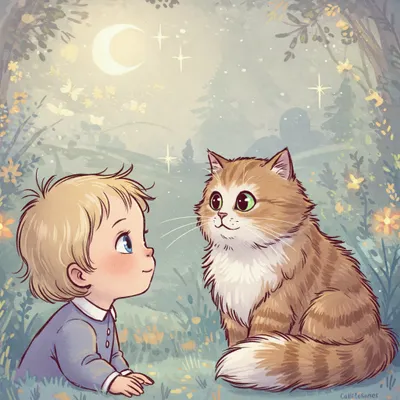
The rhyme depicts a child's affectionate relationship with a pet cat and promotes several important values:
- Kindness to animals: The child promises to be gentle and not "pull her tail"
- Empathy: Understanding that the cat will "growl" if treated roughly
- Responsibility: Caring for a pet requires thoughtful behavior
- Mutual respect: If the child is kind, the cat will "love" and "play with" them in return
Cultural Impact
The rhyme has been used for generations to teach young children about proper treatment of pets and animals. Its simple message—that kindness begets kindness—remains relevant today.
Classification
The rhyme is classified under the Roud Folk Song Index as number 12824, placing it within the formal catalog of traditional English folk songs and nursery rhymes.