
Táimse im' Chodladh
 Ireland
 Irish Nursery Rhyme
Original Lyrics
Táimse im' chodladh, is ná dúisigh mé
Táimse im' chodladh, is ná dúisigh mé
Tá mo leanbh istigh im' bhaclann, is ná dúisigh é
Bí bí ó, bí bí ó
Bí bí ó, babaí ó
Bí bí ó, bí bí ó
Táimse im' chodladh, is ná dúisigh mé
English Translation
I am asleep, so don't wake me
I am asleep, so don't wake me
My baby is in my arms, so don't wake him
Bye bye oh, bye bye oh
Bye bye oh, baby oh
Bye bye oh, bye bye oh
I am asleep, so don't wake me
Translation Notes
Grammar Notes
Emphatic Pronouns Irish adds -se or -sa to pronouns for emphasis: - táim (I am) → táimse (I AM, emphatic) - tá tú (you are) → tá tusa (YOU are, emphatic) - tá sé (he is) → tá seisean (HE is, emphatic)
The emphasis suggests contrast or insistence: "I (not someone else) am asleep."
The Imperative Negative Irish uses ná + verb for negative commands (prohibitions): - ná habair = don't say (h- inserted before vowel) - ná bí = don't be - ná dúisigh = don't wake - ná téigh = don't go
Prepositional Pronouns Prepositions combine with pronouns to form single words: - i + mo → im' (in my) - le + mé → liom (with me) - ag + tú → agat (at you / you have) - ar + sé → air (on him)
Lenition After Possessives The possessive mo (my) causes lenition of following nouns: - codladh (sleep) → mo chodladh (my sleep) - baclann (bosom) → mo bhaclann (my bosom)
Vocabulary
Táimse = I am (emphatic form) Im' = In my (contracted from "i mo") Codladh = Sleep, sleeping Im' chodladh = Asleep (literally "in my sleeping") Ná = Don't (negative imperative particle) Dúisigh = Wake, awaken Mé = Me Mo leanbh = My baby, my child Istigh = Inside, in Baclann = Bosom, embrace, arms Bí bí ó = Nonsense lullaby syllables Babaí ó = Nonsense lullaby syllables Suantraí = Lullaby, sleep music Geantraí = Joyful music Goltraí = Sorrowful music Aos sí = Fairy folk (in Irish mythology) Síocháin = Peace, tranquility Ciúin = Quiet, calm Codladh sámh = Peaceful sleep (traditional blessing) Oíche mhaith = Good night
History and Meaning
"Táimse im' Chodladh" (I Am Asleep) is a traditional Irish lullaby (suantraí) that has been sung to soothe babies to sleep for generations. Lullabies hold a sacred place in Irish musical tradition—they are one of the three types of ancient Irish music mentioned in Celtic mythology: suantraí (sleep music/lullabies), geantraí (joy music), and goltraí (sorrow music). This threefold classification reflects the ancient Irish understanding that music held profound power over human emotions and states of being.
Origins
"Táimse im' Chodladh" belongs to Ireland's ancient oral tradition of lullabies, passed down through countless generations of Irish mothers, grandmothers, and caregivers. The song's exact origins are lost to time, emerging from the lived experience of Irish-speaking families caring for infants in intimate, domestic settings where the Irish language remained alive even during periods when English dominated public life.
The song's gentle, repetitive structure and soothing melody embody the essential qualities of an effective lullaby. The nonsense syllables "bí bí ó, babaí ó" are characteristic of Irish lullabies, creating a rhythmic, almost hypnotic effect that helps calm and settle infants. These syllables may derive from ancient Celtic words whose original meanings have been lost over centuries of oral transmission, but their soothing acoustic properties have been preserved because they work—they help babies sleep.
Similar nonsense syllables appear in lullabies across many cultures, suggesting that the melodic and rhythmic qualities of these sounds tap into something fundamental about human infant soothing. The soft consonants (b, m) and open vowels create gentle, flowing sounds that avoid jarring or startling effects.
Meaning & Interpretation
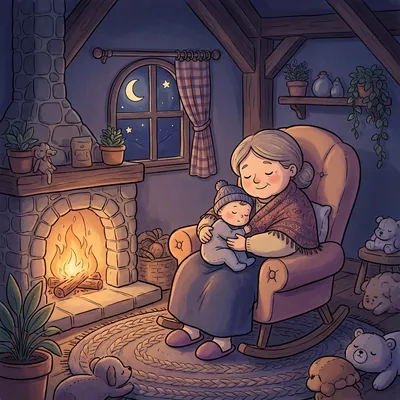
The lyrics of "Táimse im' Chodladh" capture a universally relatable parental moment: a mother or caregiver finally has her baby settled and asleep in her arms (im' bhaclann - in my bosom/arms), and she pleads with others not to disturb this precious, fragile peace. "Ná dúisigh mé" (don't wake me) expresses the dual reality that both mother and baby are in a state of rest—the baby literally asleep, the mother in a still, quiet state of relief after successfully soothing her child.
This theme—the protective plea not to disturb a sleeping infant—resonates across cultures and generations. Any parent who has spent hours settling a fussy baby understands the almost desperate desire to preserve that hard-won sleep. The slightest noise, the smallest disturbance, could break the spell and restart the entire soothing process.
The term "leanbh" (baby, child) and "baclann" (bosom, embrace) evoke the intimate physical closeness between mother and infant. In traditional Irish culture, babies were often held and carried close to the body, creating warmth, security, and the rhythmic motion that helps infants sleep. This physical intimacy is central to the lullaby's meaning—the baby isn't sleeping in a distant crib but nestled in the mother's protective embrace.
Cultural Significance
In Irish tradition, lullabies were more than mere sleep aids; they were believed to possess protective qualities, keeping evil spirits (aos sí, or fairy folk) and bad dreams away from vulnerable infants. Irish folklore contains many stories of babies being taken by the fairies and replaced with changelings, so mother's songs and blessings formed a protective barrier around the child.
Lullabies also served as vehicles for language transmission at the most intimate level. Even when English became dominant in public Irish life—in schools, government, commerce—Irish often persisted in domestic spaces, in prayers, blessings, and lullabies. Mothers sang to their babies in Irish, ensuring that the language was literally the first sound many Irish children heard, associating it with comfort, security, and maternal love.
This intimate language transmission meant that Irish survived in the heart and home even when suppressed elsewhere. The lullaby became an act of cultural preservation, performed unconsciously by mothers simply trying to soothe their babies, but collectively maintaining the language across generations.
"Táimse im' Chodladh" continues to be sung in Irish-speaking households, particularly in Gaeltacht regions, and is taught in Gaelscoileanna as both a beautiful piece of musical heritage and a living connection to Irish maternal traditions. When modern Irish mothers sing this lullaby, they participate in an unbroken line of mothers extending back centuries, all soothing their babies with the same gentle melody.
Musical Characteristics
Irish lullabies typically feature:
- Slow, flowing tempo: Matching the gentle rocking motion of soothing a baby
- Repetitive melodic patterns: Creating predictability and calm
- Narrow melodic range: Avoiding dramatic leaps that might startle
- Soft dynamics: Sung very quietly, often fading to near-whisper
- Nonsense syllables: Providing soothing sound without demanding comprehension
Lullabies are often among the most personal interpretations in Irish traditional music. Each singer brings their own emotional depth and family tradition to the performance, making every rendition unique.
Educational Value
Teaching "Táimse im' Chodladh" to children offers multiple benefits:
- Cultural heritage: Connecting to ancient Irish maternal traditions
- Emotional expression: Understanding tenderness, protection, and care
- Musical sensitivity: Developing ability to sing gently and expressively
- Language learning: Vocabulary related to sleep, family, and emotion
- Empathy development: Understanding parental care and infant vulnerability
- Performance nuance: Learning to modulate volume and tone for emotional effect