
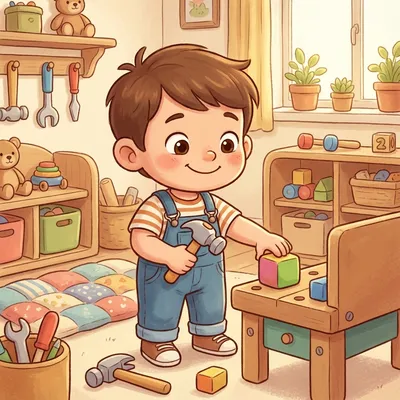
Johnny Works With One Hammer
 20th Century
  UK / USA
 Lyrics
Johnny works with one hammer,
One hammer, one hammer,
Johnny works with one hammer,
Then he works with two.
Johnny works with two hammers,
Two hammers, two hammers,
Johnny works with two hammers,
Then he works with three.
Johnny works with three hammers,
Three hammers, three hammers,
Johnny works with three hammers,
Then he works with four.
Johnny works with four hammers,
Four hammers, four hammers,
Johnny works with four hammers,
Then he works with five.
Johnny works with five hammers,
Five hammers, five hammers,
Johnny works with five hammers,
Then he goes to sleep!
Actions:
One hammer = one fist pounding
Two hammers = both fists pounding
Three hammers = both fists and one foot
Four hammers = both fists and both feet
Five hammers = fists, feet, and head nodding
One hammer, one hammer,
Johnny works with one hammer,
Then he works with two.
Johnny works with two hammers,
Two hammers, two hammers,
Johnny works with two hammers,
Then he works with three.
Johnny works with three hammers,
Three hammers, three hammers,
Johnny works with three hammers,
Then he works with four.
Johnny works with four hammers,
Four hammers, four hammers,
Johnny works with four hammers,
Then he works with five.
Johnny works with five hammers,
Five hammers, five hammers,
Johnny works with five hammers,
Then he goes to sleep!
Actions:
One hammer = one fist pounding
Two hammers = both fists pounding
Three hammers = both fists and one foot
Four hammers = both fists and both feet
Five hammers = fists, feet, and head nodding
History and Meaning
"Johnny Works With One Hammer" is an action song and counting rhyme that has been popular in schools and nurseries throughout the 20th century.
Origins
The song appears to have originated in the United States or United Kingdom in the early 20th century. It was designed as an educational tool to teach counting while providing physical activity.
How It's Performed
The song is performed with cumulative actions:
- Verse 1: Pound one fist on knee (one hammer)
- Verse 2: Pound both fists (two hammers)
- Verse 3: Add one foot tapping (three hammers)
- Verse 4: Add both feet tapping (four hammers)
- Verse 5: Add head nodding (five hammers)
- Final: Fall "asleep" and rest!
Educational Value
The song excels at teaching:
- Counting to five: Each verse adds another "hammer"
- Physical coordination: Children must maintain multiple movements simultaneously
- Addition concepts: New movements are added cumulatively
- Listening skills: Children must follow along with changing movements
- Self-regulation: The "sleep" ending teaches calming down
Why It Works
The gradual increase in physical activity engages children's energy, while the final "sleep" verse provides a natural cool-down. This makes it perfect for transitions in classrooms or before quiet time.