

Little Polly Flinders
 England
 Lyrics
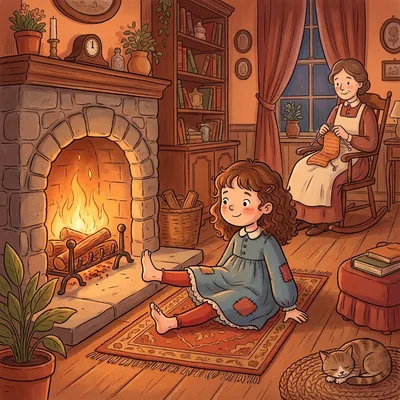
Sat among the cinders,
Warming her pretty little toes;
Her mother came and caught her,
And whipped her little daughter
For spoiling her nice new clothes.
History and Meaning
This English nursery rhyme dates back to the early 1800s, sometimes attributed to Charles Dibdin, and gained popularity in the mid-19th century. The rhyme tells the story of Little Polly Flinders who "sat among the cinders, warming her pretty little toes," which resulted in spoiling her "nice new clothes." As a consequence for ruining her clothes, her mother "came and caught her, and whipped her little daughter," reflecting 19th-century child-rearing practices where corporal punishment was common to instill obedience and care for possessions. Modern versions of the rhyme often omit or soften the last line due to evolving views on discipline, and the rhyme is generally interpreted as a cautionary tale emphasizing responsibility and discipline.