

Little Tommy Tucker
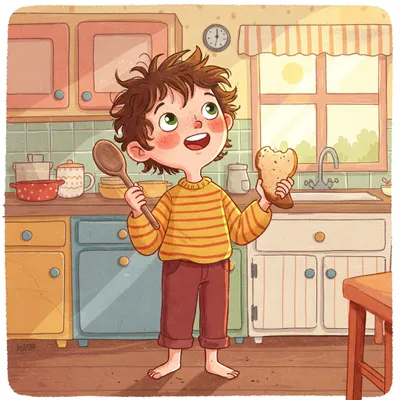
 1744
1744  England
 Lyrics
Sings for his supper.
What shall we give him?
White bread and butter.
How shall he cut it
Without a knife?
How will he be married
Without a wife?
History and Meaning
"Little Tommy Tucker" is a traditional English nursery rhyme that first appeared in print around 1744 in "Tommy Thumb's Pretty Song Book," one of the earliest known collections of nursery rhymes.
Publication History
The initial publication contained only the first four lines of the rhyme. A more complete version, expanded to eight lines, was later published in "Mother Goose's Melody" around 1765. This extended version added the lines about Tommy lacking a knife to cut his bread and a wife to marry.
Meaning of "Tommy Tucker"
"Tommy Tucker" was a generic name often used in 18th-century English folklore for an impoverished or orphaned child. The character represents the lowest rungs of society—someone who must literally sing for their supper to survive.
"Singing for One's Supper"
The phrase "sing for one's supper" was already proverbial by the 17th century, meaning to earn one's keep through performance or labor. Tommy Tucker embodies this concept—he has nothing to offer but his voice, and must perform to receive even the most basic necessities.
The Irony of White Bread
The offering of "white bread and butter" carries historical significance. During the 17th and 18th centuries, white bread was considered a luxury good, often out of reach for the lower classes who typically ate coarser brown bread. Offering white bread to an impoverished child like Tommy Tucker is deeply ironic—it's a delicacy he would rarely, if ever, have access to in his daily life.
Some scholars have interpreted this as "evil mockery"—dangling luxury before someone who cannot truly attain it. Other versions of the rhyme specify "brown bread and butter," perhaps to make the offering more realistic for Tommy's station.
The Extended Verses
The later verses emphasize Tommy's poverty further:
- He lacks a knife to cut the bread—he owns nothing
- He lacks a wife to marry—he has no social standing to attract a partner
These additions paint a complete picture of deprivation and social exclusion.
L. Frank Baum's Interpretation
L. Frank Baum (author of "The Wonderful Wizard of Oz") offered a gentler interpretation in his 1897 work "Mother Goose in Prose." In his version, Tommy Tucker is a hungry, homeless boy who receives white bread and butter from a kind alderman after a witty exchange, turning the tale into one of reward for cleverness.
Educational Legacy
The rhyme has endured through generations as a teaching tool for rhythm, rhyme, and early literacy skills. While its social commentary may be lost on modern children, its catchy verses continue to resonate in nurseries and classrooms.