
One for Sorrow
 1780
1780  Britain
 Lyrics
Two for joy,
Three for a girl,
Four for a boy,
Five for silver,
Six for gold,
Seven for a secret never to be told.
History and Meaning
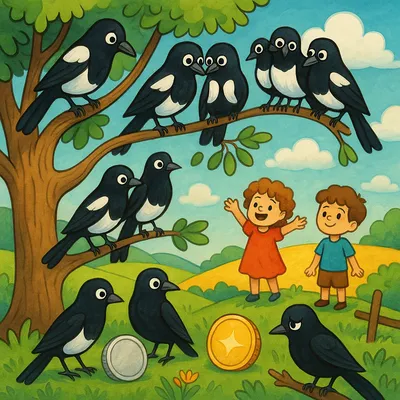
"One for Sorrow" is a traditional children's nursery rhyme deeply rooted in ancient superstitions and folklore surrounding magpies, suggesting that the number of magpies seen can predict good or bad luck. The rhyme's origins can be traced back to ornithomancy—the ancient practice of interpreting omens from bird behavior—with magpies having been considered birds of ill omen in Britain since at least the early sixteenth century. The earliest recorded version appeared in Samuel Johnson and George Steevens' 1780 supplement to their edition of "The Plays of William Shakespeare," stating: "One for sorrow, Two for mirth, Three for a wedding, Four for death." Over time, the rhyme has evolved into many variations, with a common modern version extending to "Seven for a secret, never to be told," and some longer versions incorporating darker themes related to the devil or witchcraft. A single magpie is widely considered a harbinger of bad luck, possibly because a lone magpie might have lost its mate (as magpies tend to mate for life), and various traditions evolved to ward off this misfortune—including greeting the bird with "Good morning, Mr Magpie, how are Mrs Magpie and all the other little magpies?" to imply the presence of more magpies and neutralize the ill omen. While magpies are associated with misfortune in Western folklore, they hold different symbolism in East Asian cultures, where they are considered symbols of good luck and happiness.