

Oranges and Lemons
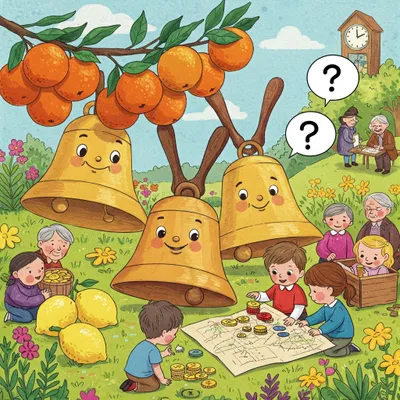
 1744
1744  England
 Lyrics
Say the bells of St. Clement's.
You owe me five farthings,
Say the bells of St. Martin's.
When will you pay me?
Say the bells at Old Bailey.
When I grow rich,
Say the bells at Shoreditch.
When will that be?
Say the bells of Stepney.
I do not know,
Says the great bell at Bow.
Here comes a candle to light you to bed,
And here comes a chopper to chop off your head!
Chip chop chip chop the last man is dead
History and Meaning
"Oranges and Lemons" is a traditional English nursery rhyme that refers not primarily to fruit, but to the bells of various churches located within or near the City of London, with the "words" spoken by the bells mimicking their unique chimes. The earliest known printed version appeared around 1744 in "Tommy Thumb's Pretty Song Book," though similar singing games referencing London churches and their bells may date back as far as 1665. The rhyme was thought to have originated as a way for Londoners to remember the names and locations of prominent churches, with each verse associated with a specific church and its historical context: St. Clement's (likely on Eastcheap, near wharves where oranges and lemons were unloaded), St. Martin Orgar (associated with moneylenders, hence "You owe me five farthings"), St Sepulchre-without-Newgate opposite the Old Bailey courthouse and Newgate Prison (where debtors were incarcerated), St Leonard's in Shoreditch (a poorer district), St Dunstan's of Stepney (connected to mariners), and the famous "great bell at Bow" belonging to St Mary-le-Bow, whose bells supposedly called Dick Whittington back to London to become Lord Mayor. The well-known macabre ending, "Here comes a candle to light you to bed, And here comes a chopper to chop off your head!" was not present in the earliest recorded versions of the rhyme.