

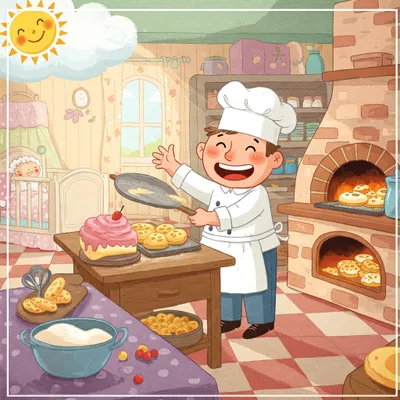
Pat-a-Cake, Pat-a-Cake, Baker's Man
 1698
1698  England
 Lyrics
Bake me a cake as fast as you can
Roll it, pat it, and mark it with a B
Throw it in the oven for Baby and me.
History and Meaning
"Pat-a-Cake, Pat-a-Cake, Baker's Man" is one of the oldest and most widely recognized English nursery rhymes, with its origins tracing back to the late 17th century. The earliest recorded version appeared in Thomas D'Urfey's play "The Campaigners" in 1698, where a nurse recites the rhyme to young charges with lines like "pat a cake Bakers man, so I will master as I can, and prick it, and prick it, and prick it, and throw't into the Oven." The rhyme later appeared in "Mother Goose's Melody" around 1765 in a version more similar to today's, and was first set to music in 1796 by James Hook in his work "A Christmas Box." The practice of marking the cake mentioned in the rhyme (such as "mark it with a B") stems from historical reality: when many households lacked their own ovens, people would prepare their dough and take it to a local baker or community bakehouse for a small fee, and marking the pastry with an identifiable symbol or initial ensured they received their own baked goods back. Today, "Pat-a-Cake" is commonly played as an interactive clapping game between two people, simulating the actions of baking a cake and encouraging the development of fine motor skills, hand-eye coordination, turn-taking, and social interaction in young children.