

Poor Jenny
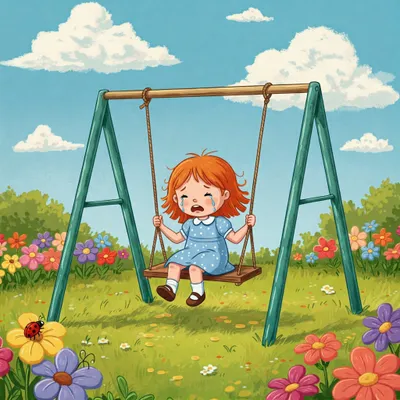
 1880s
1880s  England
 Lyrics
A-weeping, a-weeping,
Poor Jenny is a-weeping
On a bright summer’s day.
Why are you weeping,
Weeping, weeping,
Why are you weeping,
On a bright summer's day?
I'm weeping for a loved one,
A loved one, a loved one,
I'm weeping for a loved one,
On a bright summer's day.
Stand up and choose your loved one,
Your loved one, your loved one,
Stand up and choose your loved one,
One a bright summer's day.
Shake hands before you leave 'er,
You leave 'er, you leave 'er,
Shake hands before you leave 'er,
On a bright summer's day.
History and Meaning
"Poor Jenny sits a-weeping," also widely known as "Poor Mary sits a-weeping," is a popular English language nursery rhyme and singing game with a Roud Folk Song Index number of 1377. The lyrics can vary considerably, with over a hundred different versions collected in Britain since the 1880s, often using names such as Jenny, Mary, or Sally, though the earliest known recorded date for a version is 1898 by folklorist Gomme. The game involves one child, designated "Jenny" or "Mary," kneeling in the center of a circle with their head in their hands while other children join hands and walk around the weeping child singing the first verse, with the child in the middle then acting out subsequent verses, notably choosing a partner. The tune associated with "Poor Jenny" is well-known across Europe and forms the initial section of "La Bourrée des Galvachers," a folk dance tune from Burgundy, France, and has also been utilized by classical composers, notably by Dmitri Shostakovich in his first Piano Concerto, Op. 35. This play-party song is often associated with themes of courting, separation, and love, and researchers Peter and Iona Opie noted in 1976 that while numerous versions existed, the game's documented history only goes back to around 1880, making it difficult to ascertain whether "Jenny" wept for a specific sweetheart, the absence of one, a lost family member, or another reason entirely.