
Poor Jenny

Lyrics
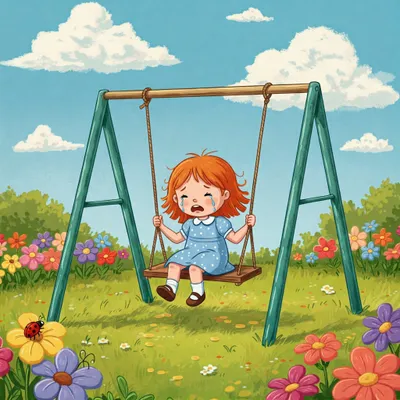
Poor Jenny is a-weeping,A-weeping, a-weeping,Poor Jenny is a-weepingOn a bright summer’s day.
Why are you weeping,Weeping, weeping,Why are you weeping,On a bright summer's day?
I'm weeping for a loved one,A loved one, a loved one,I'm weeping for a loved one,On a bright summer's day.
Stand up and choose your loved one,Your loved one, your loved one,Stand up and choose your loved one,One a bright summer's day.
Shake hands before you leave 'er,You leave 'er, you leave 'er,Shake hands before you leave 'er,On a bright summer's day.
History and Meaning
In "Poor Jenny" one child kneels in the middle of a ring and pretends to weep until they choose a partner from the circle. It is a small matchmaking game set to a mournful tune, and that tune has wandered surprisingly far: Shostakovich folded it into his First Piano Concerto.
Origins
The song is cataloged under number 1377 in the Roud Folk Song Index. While oral versions were sung and documented during the 1880s, the earliest printed collection was compiled in 1894 by folklorist Alice Bertha Gomme. Over one hundred distinct regional variations have been collected throughout Britain, featuring different female names such as Jenny, Mary, or Sally.
The tune has also traveled beyond playgrounds. Its melody shares historical roots with French folk music, forming the opening theme of the Burgundy folk dance tune "La Bourrée des Galvachers." The Russian classical composer Dmitri Shostakovich also incorporated this melody into his Piano Concerto No. 1, Op. 35.
Meaning & Interpretation
The game is played with children holding hands and walking in a circle around one child who kneels in the center with their head covered, pretending to weep. As the song progresses, the child in the center rises, chooses a friend or partner from the circle, shakes hands, and joins the ring, while the chosen partner becomes the new child in the middle.
Folklorists Peter and Iona Opie noted in 1976 that the game likely evolved from old rural courtship customs. The weeping represents the sorrow of separation or the search for a sweetheart. While the game's lyrics are simple, they provide children with a structured way to practice role-playing, choice-making, and social cooperation.
What is the history of the Poor Jenny nursery rhyme?
The rhyme is a traditional English singing game documented in playgrounds since the 1880s. It was first formally published in 1894 by folklorist Alice Bertha Gomme.
How is the Poor Jenny playground game played?
One child kneels in the center of a circle pretending to cry while the other children dance around them. The child in the center stands up to choose a partner, shakes hands, and the chosen partner becomes the new child in the center.
Music Video
If the player is unavailable, watch this video on YouTube.
Lyrics from nurseryrhymes.info