
Ride a Cock-Horse to Coventry Cross


Lyrics
Ride a cock-horse to Coventry Cross,To see what Emma can buy;A penny white cake I'll buy for her sake,And a twopenny tart or a pie.
Alternative version:
Ride a cock-horse to Coventry Cross,To buy little Johnny a galloping horse;It trots behind and it ambles before,And Johnny shall ride till he can ride no more.
History and Meaning
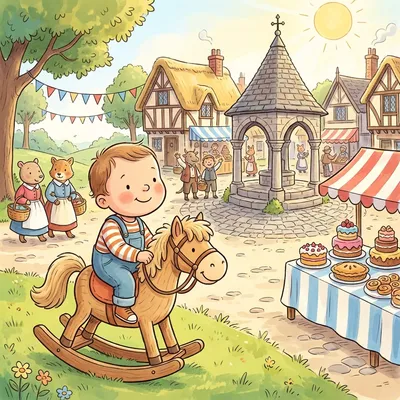
This is Coventry's version of "Ride a Cock-Horse," swapping Banbury's fine lady for a child off to the market cross to spend a penny on cake and a twopenny tart. Many English towns had their own such rhyme; Halliwell wrote this one down in the 1840s.
What is the origin of the Coventry Cross rhyme?
While the Banbury Cross version is the most famous, several English towns had their own local versions of this riding rhyme. The Coventry variant was documented in the early 1840s by folklore collector James Orchard Halliwell. It highlights the prominence of local landmarks in English towns and features local characters like "Emma" or "little Johnny" instead of the "fine lady" found in the Banbury version.
What were English market crosses used for?
Town crosses, such as the Coventry Cross, were central landmarks in English market towns. They served several vital community functions:
- They marked the central area where weekly markets were held and goods were traded.
- They acted as meeting points for townspeople.
- They were sites for official public announcements and proclamations.
What does the rhyme describe?
The rhyme describes a child's imaginative hobby-horse journey to the town's central market cross to buy treats. The lyrics focus on simple market-day pleasures, such as purchasing white cakes, twopenny tarts, or pies.
How is the rhyme performed as a knee-bouncing game?
Like the Banbury version, this rhyme was traditionally used by parents as a physical knee-bouncing game for infants:
- The parent's knees act as the "cock-horse."
- The parent bounces the child to mimic the rhythmic movement of a trotting horse.
- The physical play helps develop the child's balance and motor skills.
What does the cost of cakes and tarts suggest about its history?
The "penny white cake" and "twopenny tart" mentioned in the lyrics reflect actual market prices from the late eighteenth and early nineteenth centuries. These small treats were affordable luxuries for working-class families, making the rhyme highly relatable to the children of the era.
Lyrics from nurseryrhymes.info