

Rub-a-Dub Dub
 1798
1798  England
 Lyrics
Three men in a tub,
And who do you think they be?
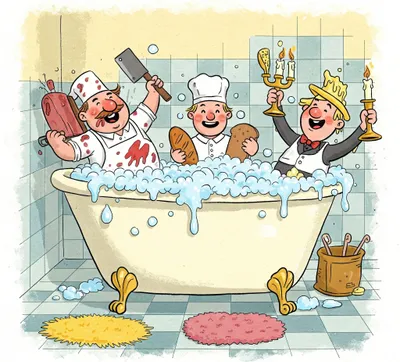
The butcher, the baker, the candlestick maker,
And all of them out to sea.
History and Meaning
"Rub-a-Dub-Dub, Three Men in a Tub" has a surprisingly risqué origin that dates back centuries, evolving significantly from its earliest known forms to become the whimsical children's rhyme we know today. The rhyme first appeared in print in the late 18th century, specifically in the second volume of English composer James Hook's "A Christmas Box" in 1798 under the title "Dub a dub dub." An early recorded version, similar to one published in Boston around 1825 in "Mother Goose's Quarto or Melodies Complete," read: "Hey! rub-a-dub, ho! rub-a-dub, three maids in a tub, And who do you think were there? The butcher, the baker, the candlestick-maker, And all of them gone to the fair." In these earlier versions, the "tub" did not refer to a bathing tub but was slang for a fairground attraction akin to a peep show, where men could pay to see women, with the rhyme believed to be about respectable tradesmen—the butcher, baker, and candlestick maker—secretly ogling these women at a dubious sideshow at a local fair. The phrase "rub-a-dub-dub" itself is thought to have developed a phonetic association with social disapproval or innuendo. Over time, particularly around 1830, the more salacious elements and the "maids" were removed from nursery books due to Victorian sensibilities, and by 1842, a version collected by James Orchard Halliwell featured "three fools in a tub." The rhyme was eventually sanitized, replacing the "maids" with "men" and shifting the context to a more innocuous scene, often implying they were "out to sea," thus the modern version is a tamed descendant of a rhyme with a considerably more suggestive past.