
Skip to My Lou
 Mid-19th Century
  USA
USA Lyrics
Lou, Lou, skip to my Lou
Lou, Lou, skip to my Lou
Skip to my Lou my darlin'
Lost my partner
What'll I do?
Lost my partner
What'll I do?
Lost my partner
What'll I do?
Skip to my Lou, my darlin'
(Chorus:)
Lou, Lou, skip to my Lou
Lou, Lou, skip to my Lou
Lou, Lou, skip to my Lou
Skip to my Lou my darlin'
Found another one
Prettier too
Found another one
Prettier too
Found another one
Prettier too
Skip to my Lou, my darlin'
(Chorus)
Can't get a red bird
Bluebird'll do
Can't get a red bird
Bluebird'll do
Can't get a red bird
Bluebird'll do
Skip to my Lou, my darlin'
(Chorus)
Flies in the sugar bowl
Shoo shoo shoo
Flies in the sugar bowl
Shoo shoo shoo
Flies in the sugar bowl
Shoo shoo shoo
Skip to my Lou my darlin'
(Chorus)
History and Meaning
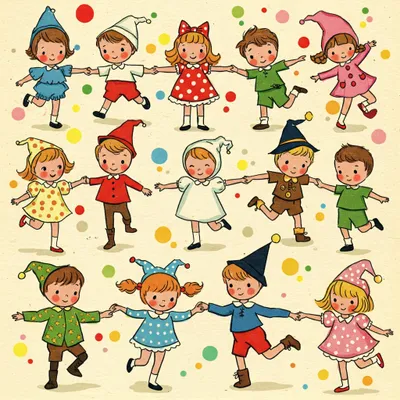
"Skip to My Lou" is a well-known American folk song and partner-stealing dance with origins tracing back to the 1840s on the American frontier. The song emerged as a "play party" game in areas where religious beliefs often discouraged dancing with musical instruments, allowing social interaction and dancing through singing games instead—poet Carl Sandburg noted its popularity in southern Indiana during Abraham Lincoln's youth. The meaning of "Lou" in the title is believed to be derived from the Scottish word "loo," which means "love," though musician Stephen Frederick Starr suggests a possible connection to the Creole folksong "Lolotte Pov'piti Lolotte" due to strong resemblances. The "Skip to My Lou" dance is primarily a partner-stealing game involving an odd number of participants forming couples in a circle, with one person left in the middle without a partner—as the song is sung and couples skip hand-in-hand around the ring, when a verse like "Lost my partner, what'll I do?" is sung, the person in the middle chooses a partner from an existing couple, often singing "I'll get another one just like you" or "better than you," and the person whose partner was "stolen" then moves to the center to continue the game. Over time, the song transitioned from adult dance halls to being a popular children's nursery rhyme and playground game, serving as an icebreaker that provides opportunities for participants to interact and get acquainted while developing dynamic balance, coordination, and rhythm. Modern adaptations can include linking elbows or incorporating hand games, making it a versatile activity for group play and social development.