

Arroz con Leche
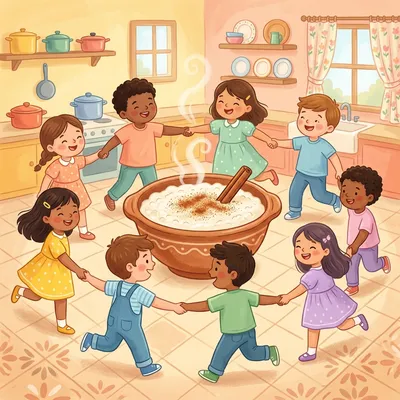

Spanish Nursery Rhyme
Original Lyrics
Arroz con leche,me quiero casarcon una señoritade San Nicolás.
Que sepa coser,que sepa bordar,que sepa abrir la puertapara ir a jugar.
English Translation
Rice with milk,I want to marrya young ladyfrom San Nicolás.
One who knows how to sew,who knows how to embroider,who knows how to open the doorto go out and play.
Translation Notes
Vocabulary
arroz - rice leche - milk casar - to marry señorita - young lady, miss coser - to sew bordar - to embroider puerta - door jugar - to play
Grammar Notes
Reflexive "me quiero casar": casarse (to get married) is reflexive, so the singer says me quiero casar, literally "I want to marry myself off." The pronoun me can hop in front of the whole phrase, as it does here.
The subjunctive "que sepa": que sepa coser means "one who knows how to sew" or "may she know how to sew." Sepa is the present subjunctive of saber (to know), used to describe a desired or hypothetical person, the ideal bride who does not yet exist.
Infinitives after "saber": sepa coser, sepa bordar, sepa abrir all pair the verb with a plain infinitive to mean "knows how to do" something.
Line-by-Line Translation
Arroz con leche, me quiero casar - "Rice with milk, I want to marry"
- arroz con leche = rice with milk (rice pudding)
- me quiero casar = I want to get married
con una señorita de San Nicolás - "a young lady from San Nicolás"
- señorita = young lady
- San Nicolás = a place name
Que sepa coser, que sepa bordar - "One who knows how to sew, who knows how to embroider"
- coser = to sew
- bordar = to embroider
que sepa abrir la puerta para ir a jugar - "who knows how to open the door to go out and play"
- puerta = door
- jugar = to play
History and Meaning
"Arroz con Leche" shares its name with a favorite Hispanic dessert, but the song is a children's singing game about picking a bride. The singer announces he wants to marry a young lady from San Nicolás who can sew, embroider, and, best of all, open the door to come out and play. Children sing it in a ring, one child in the center choosing another as the "señorita."
Origins
The song is a traditional ronda (ring game) sung throughout Spain and Latin America, with no single author and roots reaching back centuries. Its shared melody and opening line are known almost everywhere Spanish is spoken, though the later verses vary widely from country to country. The version here gives the two most common opening stanzas.
Meaning & Interpretation
On the surface it is a mock marriage proposal, listing the homemaking skills once expected of a young woman: sewing and embroidery. The last wish gives the game away, though. The bride should know how to "open the door to go out and play," which turns the grown-up talk of marriage back into what it really is, an excuse for children to choose partners and run around in a circle. Many modern singers treat the old list of wifely skills lightly or change the words.
Is Arroz con Leche also a dessert?
Yes. Arroz con leche (rice cooked with milk, sugar, and cinnamon) is a classic dessert across Spain and Latin America. The song borrows its cozy, familiar name as a cheerful opening, the way an English rhyme might start with "pease pudding."
How is Arroz con Leche played?
Children form a circle with one player in the middle. As everyone sings, the center child picks another to be the señorita, who then takes the middle for the next round. It is a choosing game, much like "The Farmer in the Dell."
Free Printable Coloring Page
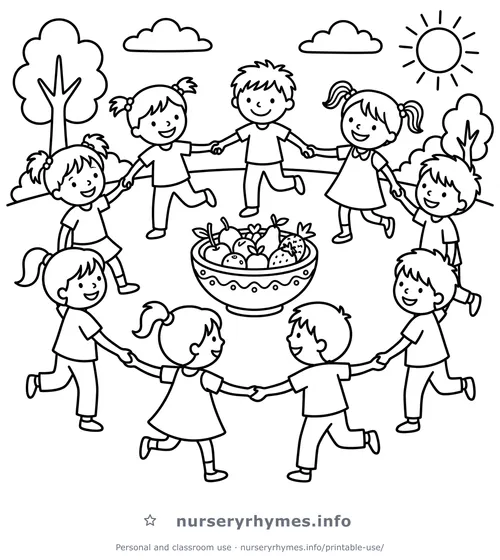
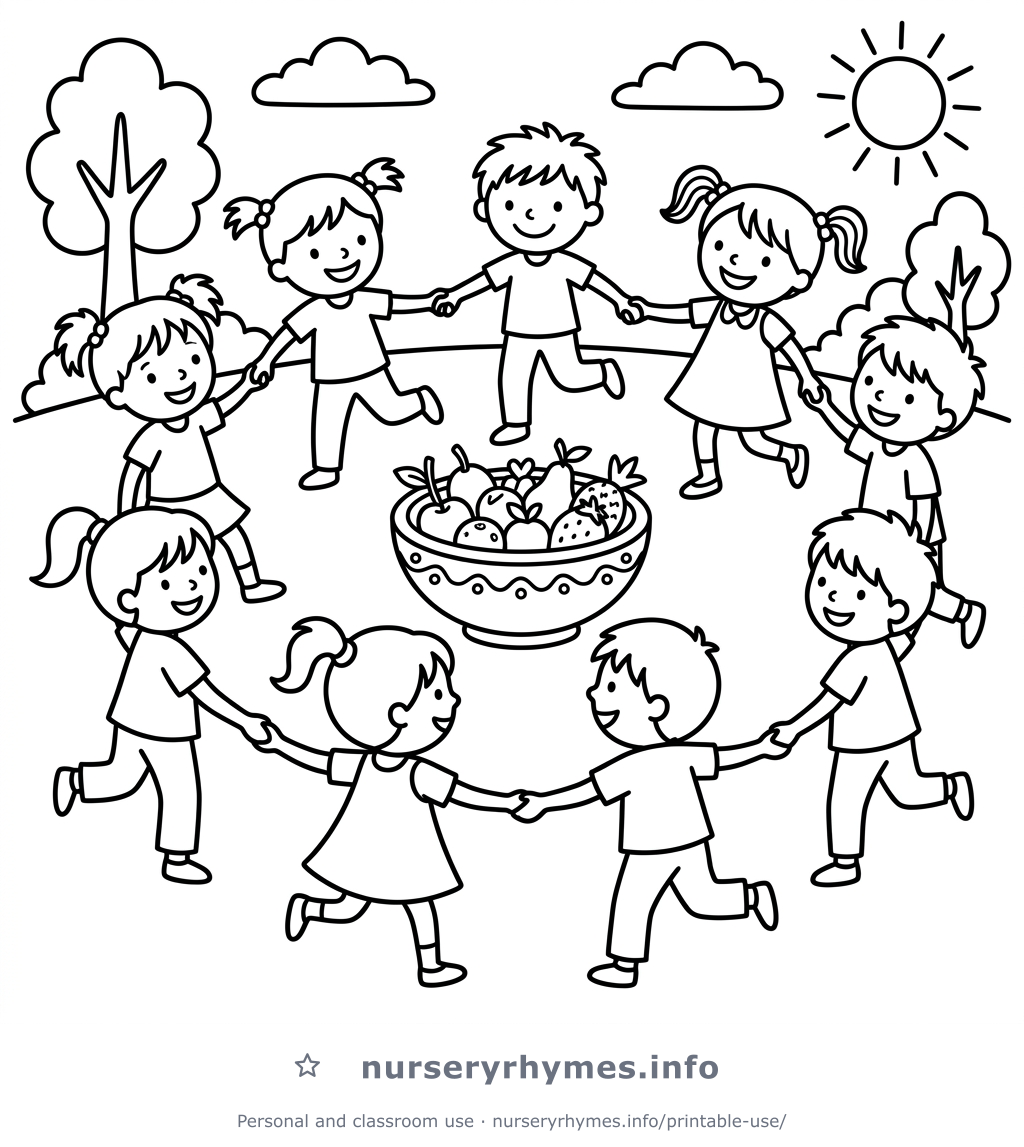
Print this Arroz con Leche coloring sheet for free and let little ones bring it to life with crayons or pencils.
Full-resolution PNG · Fits the paper size selected in your print dialog · Personal and classroom use
Lyrics from nurseryrhymes.info