
Tengo una Muñeca

Spanish Nursery Rhyme
Original Lyrics
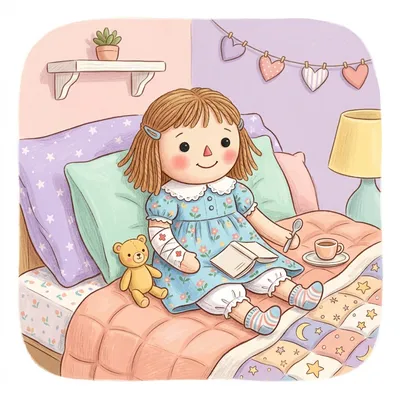
Tengo una muñeca vestida de azul,con su camisita y su canesú.La saqué a paseo, se me constipó,la tengo en la cama con mucho dolor.
Dos y dos son cuatro,cuatro y dos son seis,seis y dos son ocho,y ocho, dieciséis.
English Translation
I have a doll dressed in blue,with her little shirt and her bodice.I took her out for a walk, she caught a cold,now I have her in bed in great pain.
Two and two are four,four and two are six,six and two are eight,and eight, sixteen.
Translation Notes
Vocabulary
muñeca - doll vestida - dressed azul - blue camisita - little shirt (from camisa, shirt) canesú - bodice, yoke of a dress paseo - a walk, an outing cama - bed dolor - pain
Grammar Notes
"Tengo" from "tener": tengo una muñeca means "I have a doll." Tengo is the irregular first-person form of tener (to have), one of the first verbs Spanish learners meet.
Preterite "saqué" and "constipó": la saqué a paseo (I took her for a walk) and se me constipó (she caught a cold on me) use the preterite for completed past events. The little me in se me constipó adds the sense that it happened to the speaker's doll, a very Spanish way of showing who is affected.
Diminutive "camisita": adding -ita to camisa (shirt) gives camisita (little shirt), signaling smallness and affection, fitting for a doll's clothes.
Counting: dos y dos son cuatro means "two and two are four." The plural verb son (are) agrees with the total, and the chain keeps adding two each line.
Line-by-Line Translation
Tengo una muñeca vestida de azul - "I have a doll dressed in blue"
- muñeca = doll
- vestida de azul = dressed in blue
con su camisita y su canesú - "with her little shirt and her bodice"
- camisita = little shirt
- canesú = bodice, dress yoke
La saqué a paseo, se me constipó - "I took her out for a walk, she caught a cold"
- saqué a paseo = took out for a walk
- se me constipó = she caught a cold
la tengo en la cama con mucho dolor - "now I have her in bed in great pain"
- cama = bed
- dolor = pain
History and Meaning
"Tengo una Muñeca Vestida de Azul" begins with a child fussing over a doll in blue who catches a cold on a walk and has to be put to bed, then swerves without warning into an arithmetic chant: two and two are four, four and two are six. That odd two-part shape, a little story followed by a counting run, is exactly what generations of Spanish-speaking children have sung.
Origins
The song is a traditional Spanish children's song dating to the 19th century, with no firmly documented author. It spread through Spain and across Latin America and remains one of the first songs many Spanish-speaking children learn. The counting section is sometimes sung on its own as a numbers exercise.
Meaning & Interpretation
The first half is pure pretend play: a child treats a doll like a real patient, dressing her, walking her, worrying when she "catches cold," and tucking her into bed. The second half drops the story entirely for a burst of addition. The two pieces are held together only by melody and rhythm, which is common in old children's songs, where a memorable tune could carry a counting drill just as easily as a tale. The abrupt switch is part of the song's charm.
What does Tengo una Muñeca mean?
The title means "I have a doll." The full first line, Tengo una muñeca vestida de azul, means "I have a doll dressed in blue." One word often surprises English speakers: se constipó here means "she caught a cold," not the English sense. In Spain constiparse means to catch a cold.
Why does the song count numbers at the end?
Old children's songs often doubled as lessons. The tune makes the addition (two and two are four, and so on) easy to memorize, so the song works as both a pretend-play rhyme and a first taste of arithmetic. Teachers still use the counting half on its own.
Free Printable Coloring Page
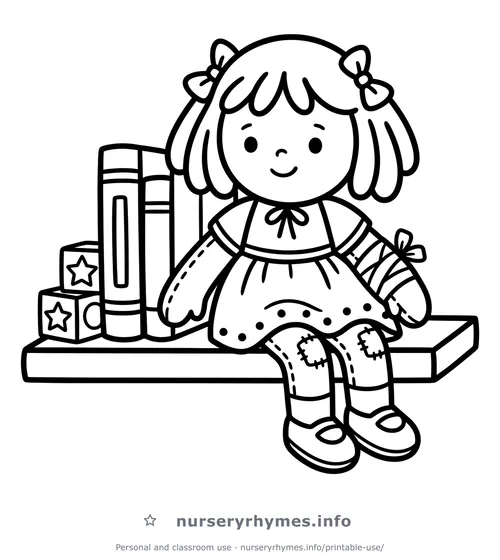
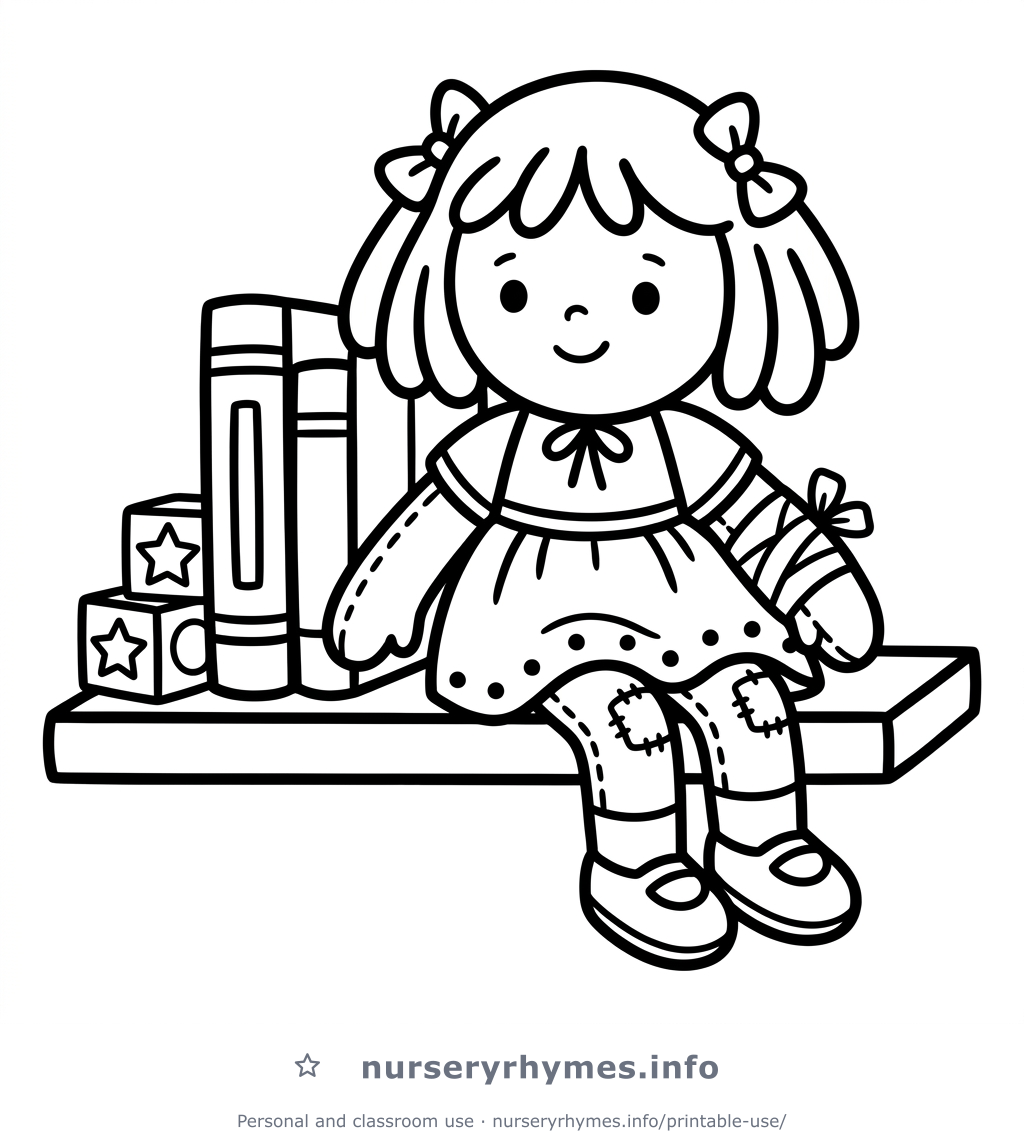
Print this Tengo una Muñeca coloring sheet for free and let little ones bring it to life with crayons or pencils.
Full-resolution PNG · Fits the paper size selected in your print dialog · Personal and classroom use
Lyrics from nurseryrhymes.info