

Taffy was a Welshman
 1780
1780  England
 Lyrics
Taffy came to my house and stole a leg of beef;
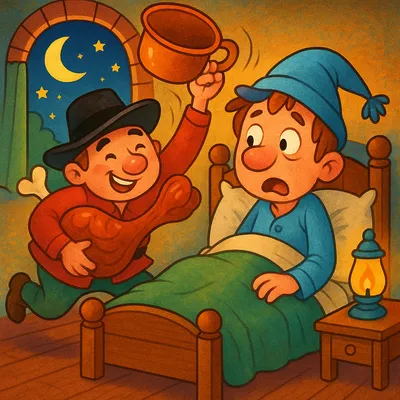
I went to Taffy's house and Taffy was in bed;
I upped with the jerry pot and hit him on the head.
Taffy was a Welshman, Taffy was a thief;
Taffy came to my house and stole a piece of beef;
I went to Taffy's house, Taffy wasn't in;
I jumped upon his Sunday hat and poked it with a pin.
Taffy was a Welshman, Taffy was a sham;
Taffy came to my house and stole a piece of lamb;
I went to Taffy's house, Taffy was away,
I stuffed his socks with sawdust and filled his shoes with clay.
Taffy was a Welshman, Taffy was a cheat,
Taffy came to my house, and stole a piece of meat;
I went to Taffy's house, Taffy was not there,
I hung his coat and trousers to roast before a fire.
History and Meaning
"Taffy Was a Welshman" is a controversial English nursery rhyme first recorded around 1780 in Nancy Cock's Pretty Song Book, though a related rhyme may have appeared as early as 1744. The term "Taffy" is a nickname for a Welshman, believed to derive from the common Welsh name "Dafydd" (the Welsh form of David) and the River Taff that flows through Cardiff. The rhyme reflects long-standing ethnic prejudices and cultural rivalries between the English and Welsh, particularly following the 13th-century conquest of Wales, as it perpetuates negative stereotypes of Welsh people as dishonest. It was historically sung in English counties bordering Wales on Saint David's Day, often accompanied by effigies of Welshmen wearing leeks. Some scholars have linked the thievery theme to Celtic mythology, specifically to Amaethon, the Welsh God of Agriculture, who was known for stealing from Arawn, the Lord of the Otherworld. The rhyme's popularity declined in the 20th century as its offensive nature became more widely recognized.