

Leron Leron Sinta
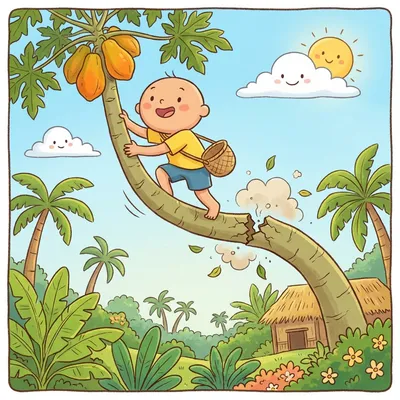

Tagalog Nursery Rhyme
Original Lyrics
Leron, Leron, sintaBuko ng papaya,Dala dala'y buslo,Sisidlan ng bunga.Pagdating sa dulo'yNabali ang sanga,Kapos kapalaran,Humanap ng iba.
English Translation
Leron, Leron, my love,Papaya tree sprouts above,Carrying a basket,A container for the fruit.Upon reaching the top,The branch broke,Such bad luck,Find someone else.
Translation Notes
Title Translation
The title "Leron Leron Sinta" can be translated as "Leron, Leron My Love" or "My Dear, Little Leron," with "sinta" being a Tagalog term of endearment meaning "beloved" or "my love."
Line-by-Line Translation
Leron, Leron, sinta - "Leron, Leron, my love"
- Sinta = my love/beloved (term of endearment)
- Leron is a name, possibly referring to a person
Buko ng papaya - "Papaya tree sprouts above"
- Buko = young sprout/fruit
- ng papaya = of papaya
Dala dala'y buslo - "Carrying a basket"
- Dala dala = carrying (reduplicated form for continuous action)
- buslo = basket
Sisidlan ng bunga - "A container for the fruit"
- Sisidlan = container/receptacle
- ng bunga = of the fruit
Pagdating sa dulo'y - "Upon reaching the top"
- Pagdating = upon arriving
- sa dulo = at the end/top
Nabali ang sanga - "The branch broke"
- Nabali = broke (past tense)
- ang sanga = the branch
Kapos kapalaran - "Such bad luck"
- Kapos = lacking/unfortunate
- kapalaran = fortune/destiny
Humanap ng iba - "Find someone else"
- Humanap = to look for/find
- ng iba = of another/someone else
Grammar Notes
Reduplication: dala dala repeats the word dala (to carry) to show the action going on and on, the basket being lugged along the whole way. Doubling a word like this to stretch out an action is very common in Tagalog.
The contraction "'y": in dala dala'y and pagdating sa dulo'y, the 'y is a squeezed-down form of ay, the little word that joins the front of a Tagalog sentence to the rest. Songs trim it to 'y so the line keeps its beat.
The marker "ng": the small word ng (said "nang") links words together and marks what is being acted on, as in buko ng papaya (sprout of the papaya) and humanap ng iba (look for another). It does a lot of quiet grammatical work in just two letters.
History and Meaning
"Leron Leron Sinta" sets up a sweet love scene and then yanks the rug out. A young man climbs a papaya tree to gather fruit for his sweetheart, the branch snaps under him, and the song just shrugs: such bad luck, go find someone else. It is sung to Filipino children for its bright, bouncing tune, though it started life as a teasing courtship song.
When was Leron Leron Sinta first documented?
"Leron Leron Sinta" is a traditional Filipino folk song with unclear origins, as is common with many folk songs passed down through oral tradition over generations. It is believed to have originated in the provinces of the Philippines and was traditionally sung during the papaya harvest season, reflecting its connection to papaya farming and rural agricultural life.
The song was included in Emilia Cavan's important collection of Filipino Folk Songs in 1964, helping to preserve it for future generations. While the exact composer remains unknown due to a lack of scholarly documentation from earlier periods, the song has stayed popular for generations.
The song has been arranged by various notable Filipino musicians over the years, including Alberto Florentino and Nicanor Abelardo. In 2022, an arrangement by Saunder Choi was performed by a Swedish choir and won an award at an international competition, demonstrating the song's global appeal.
What does the song Leron Leron Sinta mean?
The song is generally understood as a playful narrative about a person named Leron trying to pick papaya fruit for his beloved Sinta. The story takes a humorous turn when the branch breaks during the attempt, leading to the suggestion that the beloved should "find someone else," meaning someone with better luck or more skill.
Beyond the literal interpretation of fruit-picking, "Leron Leron Sinta" is often seen as a courtship song that reflects traditional Filipino courtship customs. During historical times, courtship involved men serving and demonstrating their worth to the family of the woman they intended to court. These acts could include fruit picking, helping with harvests, fetching water, and performing household repairs, all of which were ways of showing sincerity, dedication, and practical skills.
The song showcases themes of affection, dedication, and the ups and downs of life and love, all presented with the characteristic Filipino sense of humor and lightheartedness. While it is frequently presented as a children's song today due to its catchy tune and simple narrative, some scholars suggest parts of the text might have originally been intended for a more mature audience.
Lyrics from nurseryrhymes.info