

Sitsiritsit Alibangbang
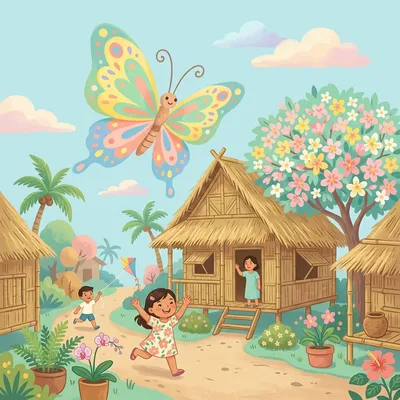

Tagalog Nursery Rhyme
Original Lyrics
Sitsiritsit, alibangbang,Salaginto at salagubang.Ang babae sa lansangan,Kung gumiri'y parang tandang.
Santo Niño sa Pandacan,Puto seko sa tindahan;Kung ayaw mong magpautang,Uubusin ka ng langgam.
Mama, mama, namamangka,Pasakayin yaring bata.Pagdating sa Maynila,Ipagpalit ng manika.
Ale, ale, namamayong,Pasukubin yaring sanggol.Pagdating sa Malabon,Ipagpalit ng bagoong.
English Translation
Sitsiritsit, butterfly,Golden beetle and June beetle.The woman on the street,When she sways, struts like a rooster.
Holy Child of Pandacan,Dry rice cakes at the store;If you won't give credit,The ants will eat you out.
Mister, mister, rowing your boat,Let this child ride along.When you reach Manila,Trade her for a doll.
Madam, madam, under your umbrella,Shelter this baby.When you reach Malabon,Trade him for shrimp paste.
Translation Notes
Vocabulary
alibangbang - butterfly salaginto - golden beetle salagubang - June beetle babae - woman lansangan - street tandang - rooster tindahan - store, shop langgam - ant bata - child manika - doll sanggol - baby, infant bagoong - fermented shrimp or fish paste
Grammar Notes
Contraction with "ay": kung gumiri'y parang tandang shortens gumiri ay to gumiri'y. The little marker ay links the subject to what is said about it, and Tagalog often contracts it to 'y after a vowel to keep the line smooth.
Verb focus "namamangka" and "namamayong": both use the nag-/nang- actor-focus pattern with reduplication to show an action in progress, "is rowing a boat" (from bangka, boat) and "is carrying an umbrella" (from payong, umbrella).
The "ng" object marker: ipagpalit ng manika (trade for a doll) and ipagpalit ng bagoong (trade for shrimp paste) use ng to mark the thing exchanged.
Line-by-Line Translation
Sitsiritsit, alibangbang - "Sitsiritsit, butterfly"
- sitsiritsit = playful nonsense sound
- alibangbang = butterfly
Ang babae sa lansangan, kung gumiri'y parang tandang - "The woman on the street, when she sways she struts like a rooster"
- babae = woman
- lansangan = street
- gumiri = to sway or sashay
- tandang = rooster
Kung ayaw mong magpautang, uubusin ka ng langgam - "If you won't give credit, the ants will eat you out"
- magpautang = to lend, to give on credit
- langgam = ants
Pagdating sa Maynila, ipagpalit ng manika - "When you reach Manila, trade her for a doll"
- pagdating = upon arriving
- manika = doll
History and Meaning
"Sitsiritsit Alibangbang" is a Tagalog folk song that strings together street scenes and cheeky little jokes, held together by rhyme rather than any single story. It opens with nonsense sounds and insects, teases a woman who struts like a rooster, warns a shopkeeper that ants will eat up anyone too stingy to give credit, and ends by offering to trade a child for a doll or a jar of shrimp paste. Filipino children learn it early, often as a clapping game.
Origins
The song comes from the oral folk tradition of the Tagalog-speaking lowlands and has no known author or firm date. Details in the lyrics point to the Spanish colonial period: it names the district of Pandacan and its Santo Niño (Holy Child), the town of Malabon, and the capital, Manila, and it borrows Spanish-rooted vocabulary. Like most folk songs, it was carried by memory and has many small regional variations in wording.
Meaning & Interpretation
The song is comic nonsense rather than a lesson. Each verse is a quick sketch: a vain woman, a tight-fisted shopkeeper, a boatman and an umbrella-carrier who are cheerfully asked to take a child off someone's hands. The humor is gentle and absurd, and the offers to swap a baby for a doll or for bagoong are jokes, the kind of exaggeration that makes children laugh. The pleasure is in the rhythm and the rhymes (alibangbang / salagubang, lansangan / tandang), not in logic.
What does Sitsiritsit mean?
Sitsiritsit is a playful, sound-based word with no dictionary meaning, chosen for its bright rhythm at the start of the song, much like "hey diddle diddle" in English. The next word, alibangbang, does mean something: it is the Tagalog word for butterfly.
Why is a child offered in trade?
The lines about trading a child for a doll or shrimp paste are comic exaggeration, not a real event. Nonsense folk songs often heap up ridiculous images for laughs, and swapping a fussy baby for a treat is the kind of joke both parents and children find funny.
Free Printable Coloring Page
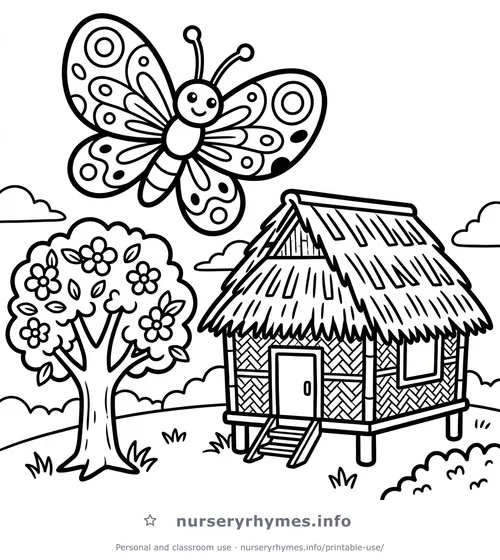
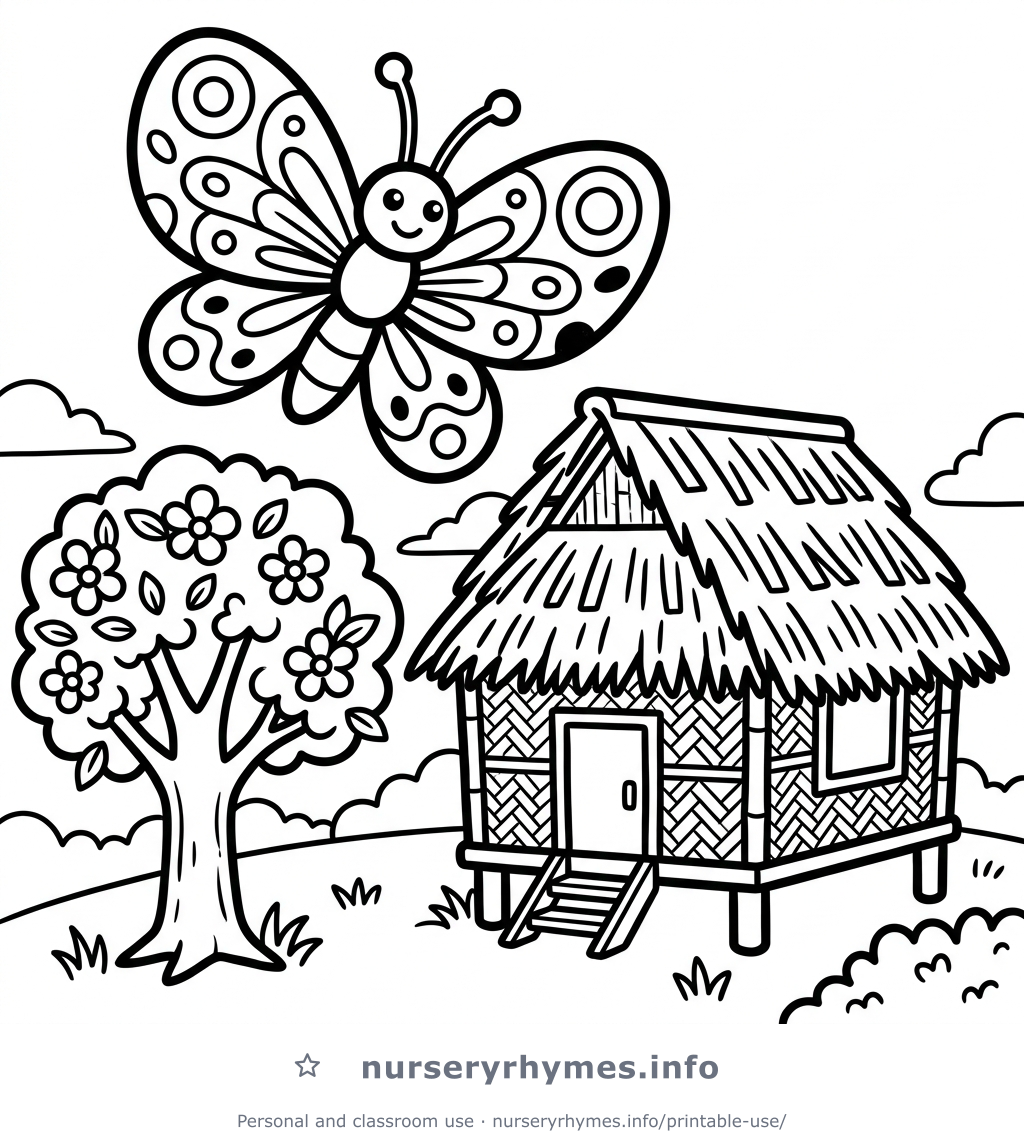
Print this Sitsiritsit Alibangbang coloring sheet for free and let little ones bring it to life with crayons or pencils.
Full-resolution PNG · Fits the paper size selected in your print dialog · Personal and classroom use
Lyrics from nurseryrhymes.info