

The Frog Prince
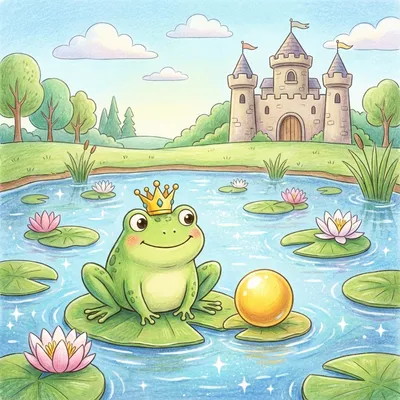
 1812
1812  Germany
 Story
Once upon a time, in a kingdom surrounded by ancient forests, there lived a beautiful princess. She was known throughout the land for her golden hair and her most treasured possession—a golden ball that sparkled like the sun itself. The princess loved nothing more than to play in the palace gardens near a deep, cool well.
One warm summer day, the princess was tossing her golden ball high into the air when it slipped from her fingers and fell—splash!—right into the deep well. She peered into the darkness but could not see the bottom. The ball was gone, and the princess began to weep.
"Why do you cry, princess?" croaked a voice. Looking down, she saw a large green frog sitting at the edge of the well, watching her with bright, curious eyes. "My golden ball has fallen into the well," she sobbed. "I would give anything to have it back!"
"I do not want your jewels or your crown," said the frog. "But if you promise that I may be your companion—eat from your plate, drink from your cup, and sleep upon your pillow—I will dive down and fetch your ball." The princess, thinking a frog could never really come to the palace, quickly agreed to the bargain.
The frog dove deep into the well and returned with the golden ball in his mouth. The princess snatched it happily and ran back to the palace, completely forgetting her promise. But that evening, as the royal family sat down to dinner, there came a strange sound—splish, splash, splish—and a knock at the door.
The princess opened the door and there sat the frog. She slammed it shut in fright. "Who was that?" asked the king. When the princess reluctantly explained her promise, her father said sternly, "You must keep your word. A promise is a promise."
So the frog was allowed to eat from the princess's golden plate and drink from her crystal cup. When it was time for bed, the frog asked to sleep on her pillow as promised. The princess, disgusted and angry, picked up the frog and threw him against the wall.
But instead of a splattered frog, there stood a handsome prince! He explained that a wicked witch had placed a curse upon him, transforming him into a frog. Only the promise of a princess could break the spell. The princess, now seeing his noble heart, asked for his forgiveness.
The prince forgave her gladly, and in time, the two fell deeply in love. They were married in a grand celebration, and the prince took his bride to his own kingdom in a golden carriage. And they lived happily ever after.
History and Meaning
"The Frog Prince" (Der Froschkönig) was the very first tale in the Brothers Grimm collection, published in 1812. This prominent placement suggests its importance in Germanic folk tradition. The story has roots in medieval tales and possibly ancient myths about transformation and enchantment.
Interestingly, in the original Grimm version, the spell is not broken by a kiss—that romantic addition came later in retellings. In the earliest versions, the frog is thrown against the wall or beheaded, suggesting that breaking the spell required an act of courage or defiance rather than affection.
Symbolism and Meaning
Keeping Promises: The central moral of the story emphasizes the importance of honoring one's word. The king's insistence that his daughter keep her promise, even when inconvenient, teaches the value of integrity and trustworthiness.
Looking Beyond Appearances: The tale reminds us not to judge by outward form alone. The ugly frog conceals a noble prince, suggesting that true worth often lies beneath the surface.
Transformation and Growth: Like many fairy tales, this story deals with transformation—not just the frog becoming human, but also the princess learning to overcome her initial revulsion and see the prince's true nature. It represents the growth that comes through fulfilling our obligations.