
The Lion and the Unicorn
 1708-1709
  England
 Lyrics
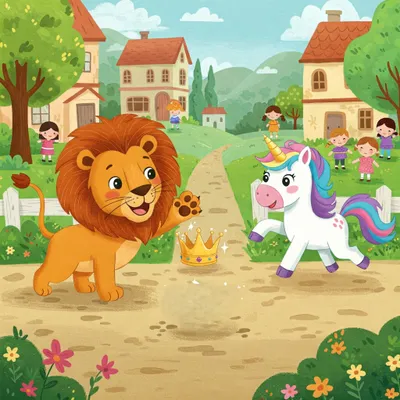
Were fighting for the crown
The lion beat the unicorn
All around the town.
Some gave them white bread,
And some gave them brown;
Some gave them plum cake
and drummed them out of town.
History and Meaning
"The Lion and the Unicorn" is a nursery rhyme with deep roots in British heraldry and political history, dating back to at least the early 18th century, with some suggestions of its existence even earlier.
The rhyme's origins are closely tied to the unification of Scotland and England in 1603, when James VI of Scotland ascended to the English throne as James I, bringing the two kingdoms under one monarch. The royal coats of arms of both nations were then combined: England's arms featured lions, while Scotland's displayed unicorns. A compromise resulted in the current British coat of arms featuring one lion (representing England) and one unicorn (representing Scotland).
The rhyme's widespread recognition intensified after the Acts of Union in 1707. A verse similar to the first stanza of the modern rhyme was recorded by William King around 1708. By the Victorian era, it had become a standard nursery rhyme, often detached from its original political context.
The "fighting for the crown" aspect of the rhyme is interpreted as a symbolic representation of the historical rivalry and sometimes uneasy union between England and Scotland. The verses about people giving them white bread, brown bread, and plum cake, and then drumming them out of town, are open to various interpretations, potentially alluding to the populace's fluctuating support during historical events.
Lewis Carroll famously incorporated the characters of the Lion and the Unicorn into his 1871 novel "Through the Looking-Glass," further cementing the rhyme in popular culture and introducing these heraldic symbols to a new generation of readers.