

The Pied Piper of Hamelin
 1284
1284  Germany
 Story
Long ago, the town of Hamelin in Germany had a terrible problem. Rats! Rats everywhere! They ate the grain, scared the cats, and even bit the babies in their cradles. The townspeople were desperate.
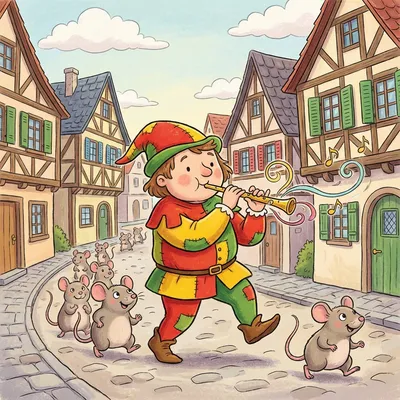
One day, a strange man appeared at the town hall. He wore a coat of many colors—pied, they called it—and carried a silver pipe. "I am the Pied Piper," he said. "For a thousand gold coins, I will rid your town of rats."
"A thousand coins!" the mayor exclaimed. "We would pay fifty thousand to be rid of these rats!" The Pied Piper smiled and raised his pipe to his lips.
The most wonderful music floated through the streets, a tune sweet and strange. From every corner, every cellar, every attic, the rats came running. They followed the Piper out of town, down to the river, where they all jumped in and were swept away. Hamelin was free of rats at last!
The Piper returned to collect his payment, but the mayor had changed his mind. "A thousand coins for a few minutes of piping? Here's fifty, and be grateful we don't throw you in jail for witchcraft!"
The Pied Piper's face grew stern. "Those who break their word shall pay a different price." He turned and left without another word.
That Sunday, while all the adults were in church, the Pied Piper returned. He played his magical tune once more, but this time it was the children who came running! Laughing and dancing, they followed him out of town, toward a distant mountain.
When the parents came out of church, their children were gone. Some say a doorway in the mountain opened and the children entered a beautiful land of eternal sunshine and happiness. The people of Hamelin never forgot the lesson: always keep your promises.
History and Meaning
"The Pied Piper of Hamelin" is based on an actual legend from the German town of Hamelin (Hameln). Town records from 1384 mention that in 1284, "130 children born in Hamelin were led away." The true events remain a mystery to this day.
The story was made famous by the Brothers Grimm and later by Robert Browning's beloved 1842 poem. Various theories about the original event include children's crusades, migration, plague, or simply an allegory about keeping promises.
The tale teaches the importance of keeping one's word. The townspeople of Hamelin broke their promise and paid a terrible price. The story warns against dishonesty and the consequences of taking advantage of others.
The image of the magical piper leading an enchanted procession has inspired countless adaptations in literature, music, and film. To this day, Hamelin celebrates the legend with a Pied Piper play performed weekly during summer months.