

There was an Old Woman Who Lived in a Shoe
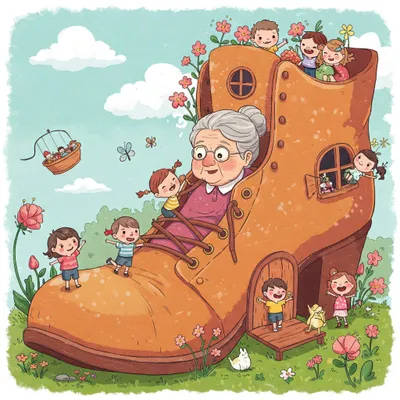
 Late 18th Century
  England
 Lyrics
Who lived in a shoe.
She had so many children,
She didn't know what to do.
She gave them some broth
And a big slice of bread,
Kissed them all soundly
And sent them to bed.
History and Meaning
"There Was an Old Woman Who Lived in a Shoe" is a well-known English nursery rhyme first documented in 1794 in Joseph Ritson's "Gammer Gurton's Garland," though its lyrics likely predate this publication. A widely accepted theory proposes the rhyme is political satire aimed at King George II (reigned 1727-1760), who was perceived as an ineffective ruler relying heavily on his wife, Queen Caroline, and was sometimes mockingly called "the old woman." The "many children" are thought to represent members of Parliament whom the king struggled to control, while the shape of Great Britain's map, when rotated clockwise ninety degrees, resembles an old-fashioned shoe. Earlier versions contained the line "She whipp'd all their bums, and sent them to bed," which was later softened to "kissed them all soundly" in more child-friendly editions. Other theories suggest the rhyme reflects harsh social conditions of the era, representing poverty and the challenges faced by mothers raising large families in cramped conditions.