

There's a Hole in My Bucket
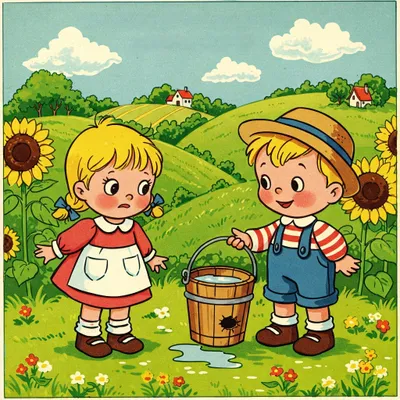
 18th Century
  Germany
 Lyrics
There's a hole in the bucket, dear Liza,
There's a hole.
Then fix it dear Henry, dear Henry, dear Henry,
Then fix it dear Henry, dear Henry, fix it.
With what should I fix it, dear Liza, dear Liza,
With what should I fix it, dear Liza, with what?
With a straw, dear Henry, dear Henry, dear Henry,
With a straw, dear Henry, dear Henry, with a straw.
But the straw is too long, dear Liza, dear Liza,
The straw is too long, dear Liza, too long.
Then cut it dear Henry, dear Henry, dear Henry,
Then cut it dear Henry, dear Henry, cut it!
With what shall I cut it, dear Liza, dear Liza,
With what shall I cut it, dear Liza, with what?
With an ax, dear Henry, dear Henry, dear Henry,
With an ax, dear Henry, an ax.
But the ax is too dull, dear Liza, dear Liza,
The ax is too dull, dear Liza, too dull.
Then, sharpen it, dear Henry, dear Henry, dear Henry,
Then sharpen it dear Henry, dear Henry, sharpen it!
With what should I sharpen it, dear Liza, dear Liza,
With what should I sharpen, dear Liza, with what?
With a stone, dear Henry, dear Henry, dear Henry,
With a stone, dear Henry, dear Henry, a stone.
But the stone is too dry, dear Liza, dear Liza,
The stone is too dry, dear Liza, too dry.
Then wet it, dear Henry, dear Henry, dear Henry,
Then wet it dear Henry, dear Henry, wet it.
With what should I wet it, dear Liza, dear Liza,
With what should I wet it, dear Liza, with what?
With water, dear Henry, dear Henry, dear Henry,
With water, dear Henry, dear Henry, with water.
But how shall I get it?, dear Liza, dear Liza,
But how shall I get it?, dear Liza, with what?
In the bucket, dear Henry, dear Henry, dear Henry,
In the bucket, dear Henry, dear Henry, in the bucket!
But there's a hole in the bucket, dear Liza, dear Liza,
There's a hole in the bucket, dear Liza, a hole.
There's a hole.
History and Meaning
The folk song "There's a Hole in My Bucket" has origins that stretch back to at least the 18th century, with its earliest known form appearing in a German song collection titled Bergliederbüchlein, published around 1700. In its initial form, it was presented as a dialogue between a woman named Liese and an unnamed man, and later German versions were reproduced under the title "Heinrich und Liese," recognized as a folk song originating from Hesse. The song gained further popularity in the 19th century, being sung as a commercium song and included in the 1858 Allgemeines Deutsches Kommersbuch. An English adaptation of the song was present by 1937, as evidenced by its inclusion in Cecil Day-Lewis's novel Starting Point, and while Pete Seeger recorded and discussed the song in the mid-20th century, noting its German origin ("Lieber Heinrich"), he is not credited as the original author of this traditional folk song. The song is characterized by a humorous dialogue between two characters, typically Henry and Liza, about a seemingly endless loop of problems encountered while trying to fix a leaky bucket.