

This Old Man
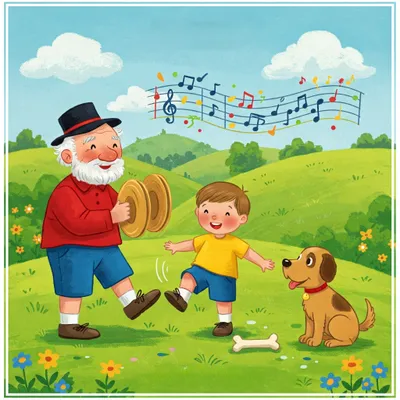
 1906
1906  England
 Lyrics
He played knick-knack on my thumb;
With a knick-knack paddywhack,
Give a dog a bone,
This old man came rolling home.
This old man, he played two,
He played knick-knack on my shoe;
With a knick-knack paddywhack,
Give a dog a bone,
This old man came rolling home.
This old man, he played three,
He played knick-knack on my knee;
With a knick-knack paddywhack,
Give a dog a bone,
This old man came rolling home.
This old man, he played four,
He played knick-knack on my door;
With a knick-knack paddywhack,
Give a dog a bone,
This old man came rolling home.
This old man, he played five,
He played knick-knack on my hive;
With a knick-knack paddywhack,
Give a dog a bone,
This old man came rolling home.
This old man, he played six,
He played knick-knack on my sticks;
With a knick-knack paddywhack,
Give a dog a bone,
This old man came rolling home.
This old man, he played seven,
He played knick-knack up in Heaven;
With a knick-knack paddywhack,
Give a dog a bone,
This old man came rolling home.
This old man, he played eight,
He played knick-knack on my gate;
With a knick-knack paddywhack,
Give a dog a bone,
This old man came rolling home.
This old man, he played nine,
He played knick-knack on my spine;
With a knick-knack paddywhack,
Give a dog a bone,
This old man came rolling home.
This old man, he played ten,
He played knick-knack over again;
With a knick-knack paddywhack,
Give a dog a bone,
This old man came rolling home.
History and Meaning
"This Old Man" is a traditional English counting song with origins tracing back to the 19th century. One of the earliest documented versions, titled "Jack Jintle," was learned by nursery rhyme collector Anne Gilchrist from her Welsh nurse in the 1870s and published in her Journal of the English Folk Dance and Song Society in 1937. The song gained wider recognition when American folk artists Pete Seeger and Ruth Crawford included it in their 1948 book "American Folk Songs for Children," and its popularity surged after being adapted as "The Children's Marching Song" for the 1958 film "The Inn of the Sixth Happiness." The famous phrase "knick-knack paddywhack" has been subject to various interpretations—some suggesting it relates to the Irish Potato Famine, with "Paddy" being a derogatory term for an Irishman and "knick-knacks" referring to trinkets sold door-to-door by starving Irish. Others believe "knick-knack" describes the rhythmic sound of tapping music, while "paddywhack" also refers to a cattle ligament given to dogs as a treat.