

Three Little Kittens
 1843
1843  USA
USA Lyrics
And they began to cry,
Oh, mother dear, we sadly fear
Our mittens we have lost
What? Lost your mittens, you naughty kittens!
Then you shall have no pie.
Mee-ow, mee-ow, mee-ow.
We shall have no pie.
Our mittens we have lost.
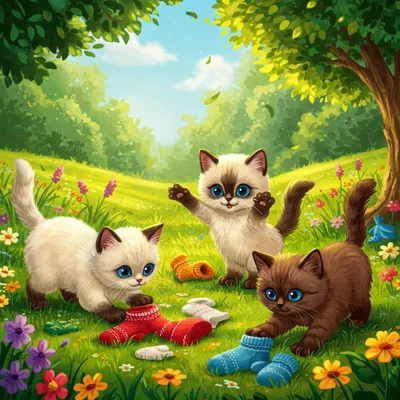
The three little kittens they found their mittens,
And they began to smile,
Oh, mother dear, see here, see here,
Our mittens we have found
What? Found your mittens, you good little kittens,
And you shall have some pie.
Mee-ow, mee-ow, mee-ow.
We shall have some pie.
Let us have some pie.
The three little kittens put on their mittens,
And soon ate up the pie;
Oh, mother dear, we greatly fear
Our mittens we have soiled
What? Soiled your mittens, you naughty kittens!
Then they began to sigh,
Mee-ow, mee-ow, mee-ow.
Our mittens we have soiled.
Then they began to sigh.
The three little kittens they washed their mittens,
And hung them out to dry;
Oh! mother dear, look here, look here,
Our mittens we have washed
What? Washed your mittens, you good little kittens,
But I smell a rat close by.
Mee-ow, mee-ow, mee-ow.
We smell a rat close by.
Let's all have some pie.
History and Meaning
"Three Little Kittens" is an English nursery rhyme with origins in British folk tradition, but the sophisticated version known today is attributed to American poet and abolitionist Eliza Lee Cabot Follen (1787-1860). Follen, a Bostonian Sunday school teacher, developed and refined an existing simpler version, with her rendition first appearing in print in Britain in 1833 and later published under her name in the United States in 1843 in her book "New Nursery Songs for All Good Children." The rhyme tells the story of three kittens who lose their mittens, find them, soil them, and finally wash them before their mother allows them to have pie. Follen's work marked a shift in children's literature towards more imaginative and entertaining content rather than solely focusing on moral lessons. Scholar Janet Sinclair Gray notes that the cats' wearing of mittens and desire for pie suggest a "bourgeois status," distinguishing them from typical barnyard felines in folk tales.