

Tommy Trot
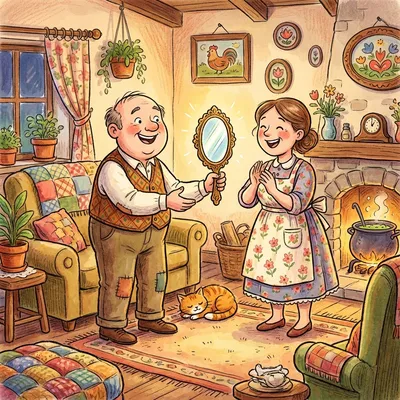
 18th Century
  England
 Lyrics
Tommy Trot, a man of law,
Sold his bed and lay upon straw;
Sold the straw and slept on grass,
To buy his wife a looking-glass.
Sold his bed and lay upon straw;
Sold the straw and slept on grass,
To buy his wife a looking-glass.
History and Meaning
"Tommy Trot" is a traditional English nursery rhyme from the 18th century that tells a humorous tale of a man's misplaced priorities.
Origins
The rhyme appears in early Mother Goose collections and various 18th-century nursery rhyme anthologies. Like many rhymes of this period, its exact origin and author are unknown.
Meaning and Interpretation
The rhyme presents a satirical portrait:
- Tommy Trot is "a man of law" (a lawyer or legal professional)
- He sells his bed, reducing himself to sleeping on straw
- He sells the straw, leaving only grass to sleep on
- All of this is to buy his wife a looking-glass (mirror)
The humor lies in the absurdity of his priorities—sacrificing comfort and necessity for a luxury item. It can be read as:
- A commentary on vanity (the mirror as a symbol)
- A satire on love-struck foolishness
- A cautionary tale about poor financial decisions
- A gentle mockery of the legal profession
Historical Context
Mirrors (looking-glasses) were expensive luxury items in the 18th century, making Tommy's sacrifice both extreme and slightly ridiculous. The rhyme reflects contemporary attitudes about domestic economy and marital dynamics.