

Tweedledum and Tweedledee
 1805
1805  Britain
 Lyrics
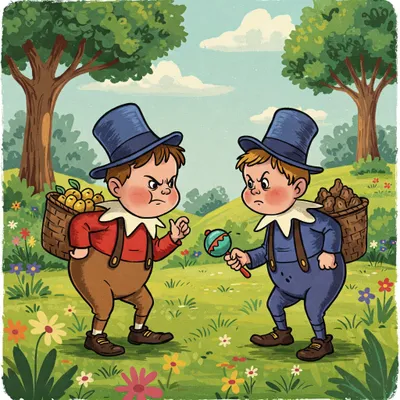
Agreed to have a battle;
For Tweedledum said Tweedledee
Had spoiled his nice new rattle.
Just then flew down a monstrous crow,
As black as a tar-barrel;
Which frightened both the heroes so,
They quite forgot their quarrel.
History and Meaning
"Tweedledum and Tweedledee" has origins that predate its popularisation by Lewis Carroll. The names first appeared in print in 1725 in a satirical epigram by John Byrom, humorously critiquing the rivalry between composers George Frideric Handel and Giovanni Bononcini, suggesting their differences were merely "Tweedle-dee and Tweedle-dum." The familiar nursery rhyme was first published around 1805 in "Original Ditties for the Nursery," depicting two characters agreeing to battle over a spoiled rattle but being frightened away by a monstrous crow. Lewis Carroll significantly cemented the characters in popular culture through his 1871 book "Through the Looking-Glass, and What Alice Found There," where Alice encounters these identical, rotund twin brothers who engage in whimsical conversation and recite the nursery rhyme. Carroll's portrayal established their lasting image as two people whose appearances and actions are so alike they are almost interchangeable—a meaning that persists in common usage today.