

A Was an Apple Pie


Lyrics
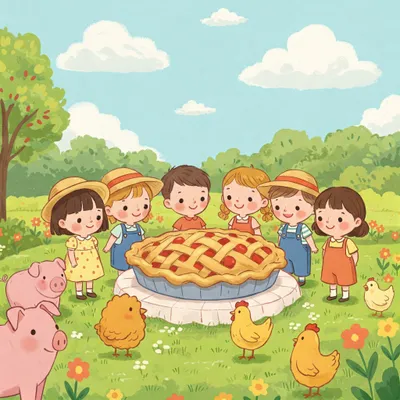
A was an Apple pie;B bit it;C cut it;D dealt it;E eat it;F fought for it;G got it;H had it;J joined it;K kept it;L longed for it;M mourned for it;N nodded at it;O opened it;P peeped in it;Q quartered it;R ran for it;S stole it;T took it;V viewed it;W wanted it;X, Y, and Z all wished for a piece in hand.
History and Meaning
"A Was an Apple Pie" is a traditional English alphabet nursery rhyme. Written as a playful alphabet narrative, it has been used for centuries to help young children learn the letters of the alphabet through a series of actions performed on a single object.
Its simple, repetitive structure and engaging theme make it an effective early childhood educational tool.
Origins
The rhyme is one of the oldest recorded alphabet charts in the English language, with references tracing back to a religious work from 1671. However, the first printed versions of the complete rhyme appeared in the mid-18th century. It was published in London in 1742 within Child's New Plaything and in 1747 in Tom Thumb's Playbook. The rhyme was widely reprinted in subsequent Mother Goose collections in both Britain and North America.
Meaning & Interpretation
The verse tells a simple, progressive story about a shared apple pie, where each letter of the alphabet performs a different action starting with that letter. For instance, B bites it, C cuts it, and D deals it. This structure turns abstract letters into active, visual verbs that are easy for young learners to remember. The final lines group the remaining letters together to finish the tale, showing all of them wishing for a piece of the pie.
When was A Was an Apple Pie first published?
The earliest recorded reference to the rhyme dates to 1671, but the first complete printed version appeared in the London educational book Child's New Plaything in 1742.
Music Video
If the player is unavailable, watch this video on YouTube.
Lyrics from nurseryrhymes.info