

A Wise Old Owl


Lyrics
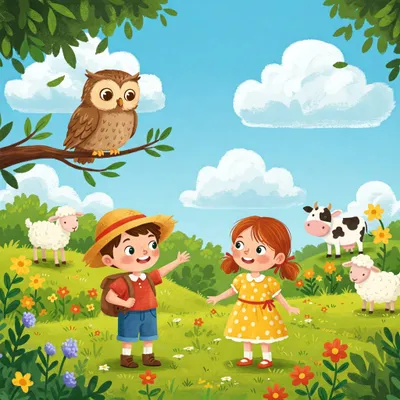
There was an owl liv'd in an oakThe more he heard, the less he spokeThe less he spoke, the more he heard.O, if men were all like that wise bird.
History and Meaning
A Wise Old Owl is a traditional children's nursery rhyme and moral poem. The brief, four-line verse tells the story of an owl who sits in an oak tree, listening carefully to everything around him while remaining quiet, suggesting that humans would benefit from adopting a similar habit.
The rhyme is widely taught to young children to encourage listening skills and quiet observation. Its simple vocabulary and strong message have made it a popular classroom maxim.
Origins
The earliest documented printed version of the rhyme appeared on April 10, 1875, in the British humor magazine Punch. This early text is identical to the modern four-line version, though its specific author is unrecorded.
The poem was likely an improvement of an older folk rhyme that included the nonsensical refrain, "There was an owl lived in an oak, wisky, wasky, weedle." During World War II, the United States military adapted the rhyme for propaganda posters, using the wise old owl as a mascot to promote the message that "silence means security" to prevent the leak of military secrets.
Meaning & Interpretation
The poem serves as a direct fable about the relationship between listening and wisdom. It argues that by speaking less and listening more, one can absorb more information and make wiser decisions.
The oak tree historically symbolizes strength and longevity in European folklore, providing a fitting home for the owl, which itself represents wisdom. The final line acts as a direct appeal to the reader, encouraging humans to emulate the quiet, observant nature of the bird.
When was A Wise Old Owl first published?
The rhyme was first published in its standard form on April 10, 1875, in the British weekly magazine Punch. It was based on older folk chants about owls nesting in oak trees.
How was the A Wise Old Owl rhyme used in World War II propaganda?
During World War II, the United States and British militaries used the rhyme on poster campaigns to encourage soldiers and citizens to avoid gossip. The wise owl's silence was framed as a model for keeping operational secrets safe.
Music Video
If the player is unavailable, watch this video on YouTube.
Lyrics from nurseryrhymes.info