
Aiken Drum


Lyrics
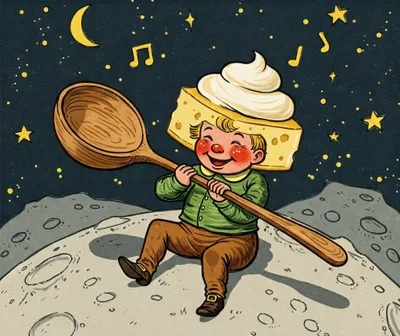
There was a man lived in the moon, lived in the moon, lived in the moon,There was a man lived in the moon,And his name was Aiken Drum.
ChorusAnd he played upon a ladle, a ladle, a ladle,And he played upon a ladle,and his name was Aiken Drum.
And his hat was made of good cream cheese, of good cream cheese, of good cream cheese,And his hat was made of good cream cheese,And his name was Aiken Drum.
And his coat was made of good roast beef, of good roast beef, of good roast beef,And his coat was made of good roast beef,And his name was Aiken Drum.
And his buttons made of penny loaves, of penny loaves, of penny loaves,And his buttons made of penny loaves,And his name was Aiken Drum.
And his waistcoat was made of crust pies, of crust pies, of crust pies,And his waistcoat was made of crust pies,And his name was Aiken Drum.
And his breeches made of haggis bags, of haggis bags, of haggis bags,And his breeches made of haggis bags,And his name was Aiken Drum.
History and Meaning
"Aiken Drum" is a traditional Scottish nursery rhyme and folksong. Famous for its whimsical nonsense, the song tells the story of a fantastical man who lives in the moon and wears clothes made entirely out of different food items.
Origins
The song was first printed in James Hogg's collection, Jacobite Relics of Scotland, published around 1820. Before its publication, the song circulated in oral tradition, with a notable reference appearing in Sir Walter Scott's 1816 novel The Antiquary. The song is indexed under Roud Folk Song Index number 2571. Over time it shifted from political satire to a children's nonsense song.
Meaning & Interpretation
The nursery rhyme is primarily celebrated as a song of playful nonsense. The humor comes from the imagery of Aiken Drum's wardrobe, which includes a hat of cream cheese, a coat of roast beef, buttons made of penny loaves, and breeches made of haggis bags.
However, the original song printed in Jacobite Relics was a political satire concerning the Battle of Sheriffmuir in 1715. In that version, the Whig forces and the supporters of the House of Hanover were mocked. The name "Aiken Drum" may have originally referred to a mythological sprite or a local figure, but as the political tensions faded, the character was relocated to the moon, and his political associations were replaced with comical foods.
Who is Aiken Drum in Scottish history?
In the original 1715 Jacobite context, Aiken Drum was a character in a satirical song mocking the Whig forces at the Battle of Sheriffmuir. Over time, he became a neutral, whimsical character in a children's rhyme.
What is the meaning of the song Aiken Drum?
The modern rhyme is a nonsense song about a man living in the moon dressed in foods like roast beef and cream cheese. It is used to entertain children and introduce them to traditional Scottish foods.
Music Video
If the player is unavailable, watch this video on YouTube.
Lyrics from nurseryrhymes.info