
Barber, Barber, Shave a Pig


Lyrics
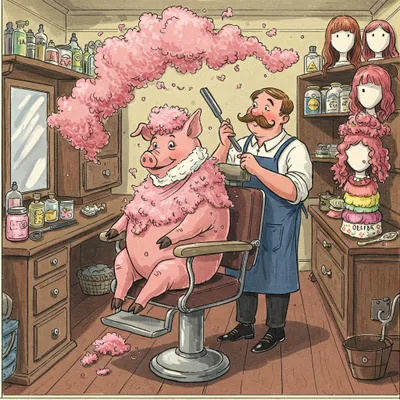
Barber, barber, shave a pig,How many hairs to make a wig?Four and twenty, that's enough.Give the barber a pinch of snuff.
History and Meaning
"Barber, Barber, Shave a Pig" is a traditional English nonsense nursery rhyme. Short, catchy, and humorous, the rhyme uses playful absurdity to entertain young children and encourage rhythmic speech.
The rhyme has been popular in children's books since the 19th century, serving as a simple chant for play and entertainment.
Origins
The rhyme grew out of English oral tradition and was first formally compiled by the folklorist James Orchard Halliwell in his 1841 volume The Nursery Rhymes of England. Although its printed record began in the mid-19th century, the rhyme was likely circulating orally during the 18th century or earlier as a traditional street chant or children's play verse.
Meaning & Interpretation
The lyrics are based on absolute absurdity, asking a barber to perform the ridiculous task of shaving a pig. It then asks how many coarse pig hairs are needed to make a wig, answering with the traditional number "four and twenty." Wigs were very common in 18th-century England, but using pig hair would be impossible. The final line suggests giving the barber a pinch of snuff (a type of pulverized tobacco) as payment or tip, which was a standard social custom of the era. Barbers of the time often doubled as dental clinics or minor surgery centers, adding a humorous layer to the strange requests they received.
What is the meaning of the pig shaving rhyme?
The rhyme is a nonsense song meant to provoke laughter through silly imagery, such as a barber shaving a pig and using its hair to craft a wig. It also provides a snapshot of historical social customs by referencing wigs and snuff.
Music Video
If the player is unavailable, watch this video on YouTube.
Lyrics from nurseryrhymes.info