

Bobby Shafto's Gone to Sea


Lyrics
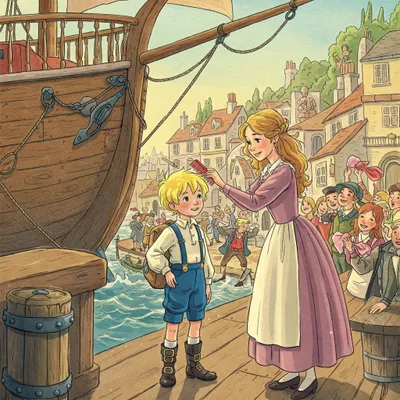
Bobby Shafto's gone to sea,Silver buckles at his knee;He'll come back and marry me,Bonny Bobby Shafto!Bobby Shafto's bright and fair,Combing down his yellow hair;He's my love for evermore,Bonny Bobby Shafto!
History and Meaning
"Bobby Shafto's Gone to Sea" (also spelled "Bobby Shaftoe") is a traditional English folk song and nursery rhyme originating in the North East of England. Celebrating a handsome lover who has sailed away, the song is well-known for its lively melody and rhythmic repetition.
The verse is notable for combining local maritime folklore with historical eighteenth-century political campaigning.
Origins
The melody of the song is significantly older than the lyrics. It was originally played as a pipe tune called "Brave Willie Forster," which was recorded in Northumbrian manuscripts in the 1690s and 1730s. The song with its modern lyrics was first published in print in 1805. A later popular version was printed in John Bell's 1812 collection Rhymes of Northern Bards, which added several verses detailing the community's excitement.
Meaning & Interpretation
The lyrics are commonly associated with Robert Shafto, a wealthy politician from County Durham who served as a Member of Parliament in the late eighteenth century. During his 1761 parliamentary election campaign, his supporters adapted the traditional folk tune into a campaign jingle. They added verses praising his "yellow hair" and good looks to win votes, particularly from local women who were encouraged to cheer him on. Although the song claims Bobby went to sea, there is no historical record of the politician Robert Shafto ever serving at sea. Instead, the sea-faring theme was likely carried over from older folk variants of the tune.
Who was the real Bobby Shafto?
The song is most famous for its association with Robert Shafto, a County Durham landowner who served as a British Member of Parliament starting in 1760. His supporters used the song as an election jingle during his Durham campaign in 1761.
When was Bobby Shafto first published?
The song was first formally published in print in 1805. However, the melody dates back to at least the 1690s as a traditional Northumbrian pipe tune titled "Brave Willie Forster."
Music Video
If the player is unavailable, watch this video on YouTube.
Lyrics from nurseryrhymes.info