
Clap Hands
 UK
UK Lyrics
Till Daddy comes home;
For Daddy's got money,
But Mummy's got none.
Clap hands, clap hands,
Till Daddy comes home;
For Daddy's got money,
And Mummy has a bun.
History and Meaning
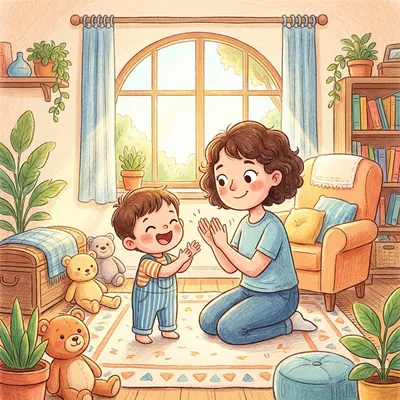
A traditional hand-clapping rhyme that reflects historical family roles but remains a popular rhythmic game for babies, with one well-known variant being "If you're happy and you know it, clap your hands." Another traditional version with Scottish and Irish roots features lyrics like "Clap hands, clap hands, Till father comes home, For father's got money, But mother's got none," reflecting a historical context where women were reliant on their husbands' earnings, and in 1938, American vocalist Al Donahue released a slightly altered version with lyrics by Nat Simon, changing the line to "Daddy's got money and Mom'll have some" to emphasize sharing. The practice of hand-clapping games itself has a rich and long history, serving as a significant part of childhood play across various cultures globally, primarily an oral tradition passed down verbally with considerable variation based on region and local customs. Historically, some of the earliest recorded European clapping games like "Pat-a-Cake" date back to 1698, and clapping games gained significant popularity in the 1960s, though their origins are far older, with many such games in America originating from African-American traditions and playing a role in teaching musical practices and social identity. Beyond entertainment, hand-clapping games offer developmental benefits for children including enhancing bilateral coordination, promoting midline development, improving visual tracking, and fostering motor and cognitive skills, with the simple act of clapping hands to a rhyme helping children develop an understanding of rhythm and coordination.