

Cobbler, Cobbler Mend My Shoe


Lyrics
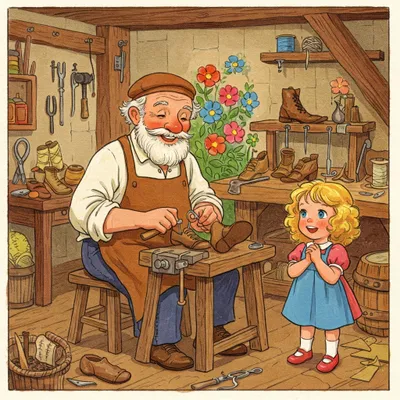
Cobbler, cobbler, mend my shoe.Get it done by half past two.Half past two is much too late.Get it done by half past eight.
Stitch it up and stitch it down.And I’ll give you half a crown.
History and Meaning
"Cobbler, cobbler, mend my shoe, Get it done by half past two." This traditional English nursery rhyme and street chant has been shared by children for centuries. Cobblers, who repaired and crafted leather footwear, were essential tradespeople in daily life before shoes were mass-produced. The rhythmic structure of the verse made it a popular accompaniment for skipping rope games and street play.
Origins
The earliest printed version of this rhyme dates back to 1765, where it appeared in children's poetry collections. The chant reflects a time when footwear was crafted by hand and repaired repeatedly to extend its life. In the eighteenth and nineteenth centuries, street vendors and craftsmen like cobblers advertised their services with rhythmic calls, which children often adapted into play songs.
Meaning & Interpretation
The verse describes a simple business transaction between a customer and a shoemaker. The customer is in a rush, demanding the repair be finished by half past two or half past eight. To encourage the cobbler to work quickly, the customer offers half a crown. This coin was a significant amount of money in historical Britain, showing how much the speaker valued prompt service.
What is a cobbler?
A cobbler is a craftsman who repairs shoes rather than making new ones. Historically, shoemakers who crafted new footwear from scratch were known as cordwainers. Cobblers performed the essential work of patching leather, replacing worn soles, and stitching seams to keep everyday shoes functional.
Why does the rhyme mention half a crown?
A half-crown was a British coin worth two shillings and sixpence. In the eighteenth century, this was a generous sum for a minor shoe repair. Offering half a crown was a way to bribe the cobbler to prioritize the work and finish the repair quickly.
Music Video
If the player is unavailable, watch this video on YouTube.
Lyrics from nurseryrhymes.info