

Cock-a-Doodle Doo


Lyrics
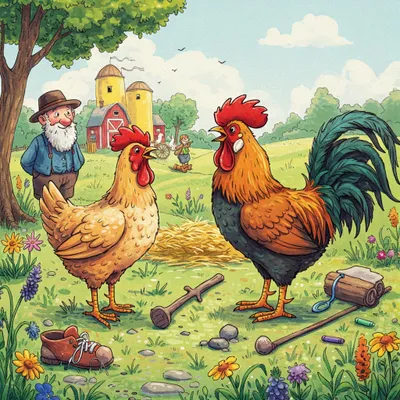
Cock a doodle doo!My dame has lost her shoe,My master's lost his fiddling stick,And doesn't know what to do.
History and Meaning
"Cock-a-Doodle Doo" is a traditional English nursery rhyme built around the classic representation of a rooster's morning crow. It is one of the oldest short rhymes in the English language, using simple wordplay to depict a moment of domestic confusion.
Because of its repetitive structure and rhythmic beat, the rhyme has long been popular as a chant to help young children practice vocal articulation.
Origins
The earliest documented print version of the rhyme was published in London in 1765 within the collection Mother Goose's Melody. However, historical records suggest that parts of the rhyme are much older, potentially tracing back to a mock rooster crow in an English murder pamphlet from 1606. The standard modern version, which is frequently printed in children's books, was expanded with additional verses in the 19th century by the folklorist James Orchard Halliwell.
Meaning & Interpretation
The narrative describes a household in slight disarray: a dame who has lost her shoe and a master who has lost his fiddling stick, leaving them unsure of what to do next. While some folklorists suggest the rhyme is simply a silly nonsense song, others have attempted to link the characters to historical events. A common political interpretation relates the master and dame to monks and nuns losing their properties and positions during the Dissolution of the Monasteries under King Henry VIII.
What is the history behind Cock-a-Doodle-Doo?
The rhyme was first published in Mother Goose's Melody in 1765, though elements of the text trace back to 1606. Over the centuries, it evolved from an early theatrical sound effect mock-crow into a widely collected nursery rhyme.
Music Video
If the player is unavailable, watch this video on YouTube.
Related Nursery Rhymes





Lyrics from nurseryrhymes.info