
A-Hunting We Will Go

Lyrics
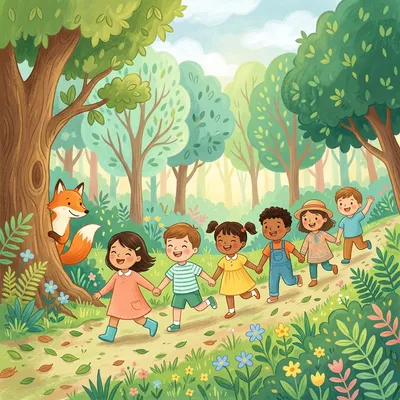
A-hunting we will go,A-hunting we will go,We'll catch a fox and put him in a box,And then we'll let him go.
A-hunting we will go,A-hunting we will go,We'll catch a mouse and put him in a house,And then we'll let him go.
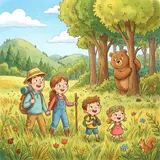
A-hunting we will go,A-hunting we will go,We'll catch a bear and put him in a chair,And then we'll let him go.
History and Meaning
The song children sing in classrooms today started life as an adult hunting song on the London stage. Henry Fielding wrote the original words in 1734 for his ballad opera "Don Quixote in England", and they are nothing like the nursery version: "The dusky night rides down the sky, and ushers in the morn." Somewhere between that theatre and the modern nursery, the song lost its horses, its dawn, and its kill. What replaced them was a fox in a box who gets released four bars later.
That single change of ending is what turned a hunting song into a children's song.
Origins
Fielding's 1734 lyric was a chorus for gentlemen riding out at daybreak, and he directed that it be sung to an existing air, "A-Begging We Will Go". The tune most people hum now is usually credited to the English composer Thomas Arne, who is said to have set the song for a 1777 London production of John Gay's "The Beggar's Opera". Arne is best known for "Rule, Britannia!" and for the theatre music he wrote across decades of London seasons, so the attribution is plausible, but it is an attribution rather than a documented composition date, and reference works repeat it with varying confidence. Treat 1777 as the date attached to the tune, not to the words children sing.
The nursery version has no author and no first printing that anyone can point to. It circulated orally, was collected in English and American children's songbooks through the nineteenth and twentieth centuries, and is indexed in the Roud Folk Song Index as number 12972. The catch-and-release verse appears to be a later folk simplification, made by and for singers who wanted the tune without the hunt.
Meaning & Interpretation
Read the children's verse literally and the plot is very short. A group sets out hunting, catches a fox, puts it in a box, and then opens the box. Nothing is hurt, nothing is kept, and the song resets so the next verse can catch something else. Some older printings end "and never let him go", and that variant still turns up, but the released-fox ending is the one that won, which says a good deal about who has been doing the singing.
The rhyme scheme is doing most of the work. Fox goes with box, mouse with house, bear with chair, fish with dish, snake with cake. The animal is chosen because something rhymes with it, not because it makes sense, which is why the results get sillier as the verses go on. A bear in a chair is a joke, and children hear it as one.
Who wrote A-Hunting We Will Go?
Henry Fielding wrote the original adult lyric in 1734 for his ballad opera "Don Quixote in England", indicating it be sung to the older tune "A-Begging We Will Go". The melody sung today is generally attributed to Thomas Arne, in connection with a 1777 London staging of "The Beggar's Opera". The children's words, with the fox and the box, are traditional and anonymous.
Why does the song let the fox go?
Because that ending is what makes it usable with young children. The line "and then we'll let him go" removes the hunt's outcome entirely and replaces it with a game of catch and release. It also gives the song its loop: once the animal is free, a new verse can start with a new animal, and the singing can continue for as long as anyone can think of rhymes.
How is A-Hunting We Will Go used in classrooms?
It works as a marching and action song. Children walk or march in a circle on the verse, mime catching the animal on "we'll catch a fox", clap the box shut, and open their hands wide on "let him go". Teachers commonly turn it into a rhyming exercise by asking the group to supply the next pair, which is why versions with mice in houses, bears in chairs, fish on dishes and snakes with cakes are all in common use. There is no fixed set of verses to get right.
Related Nursery Rhymes
Lyrics from nurseryrhymes.info