

A Sailor Went to Sea, Sea, Sea
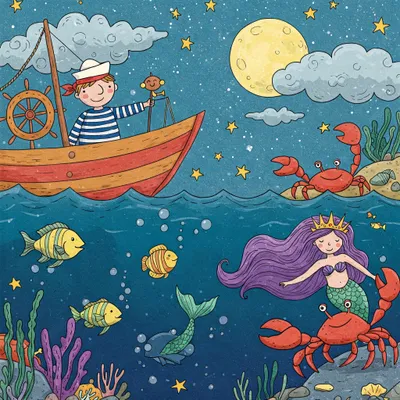

Lyrics
A sailor went to sea, sea, sea,To see what he could see, see, seeBut all that he could see, see, seeWas the bottom of the deep blue, sea, sea, sea.
A sailor went to knee, knee, knee,To see what he could knee, knee, kneeBut all that he could knee, knee, kneeWas the bottom of the deep blue knee, knee, knee.
A sailor went to toe, toe, toe,To see what he could toe, toe, toeBut all that he could toe, toe, toeWas the bottom of the deep blue toe, toe, toe.
A sailor went to sea, knee, toe,To see what he could see, knee, toeBut all that he could see, knee, toeWas the bottom of the deep blue, see, knee, toe.
Actions
Clapping actions throughout: either 'click, clap, click, clap' if alone or clap together, clap alone, clap together, alone if in pairs.
Where the words are sea/see, you can replace a clap by holding your hands near your eyes. Then for 'knee', tap your knees three times and so on.
History and Meaning
"A Sailor Went to Sea, Sea, Sea" is a traditional children's playground song and hand-clapping game. Popular throughout the English-speaking world, the song is primarily sung by school-aged children as a test of rhythm, hand-eye coordination, and physical timing.
The rhyme is built around wordplay, using homophones to create a humorous and repetitive sequence of physical movements.
Origins
The song began as an oral playground chant in the late nineteenth or early twentieth century. Early versions recorded in British and American playgrounds were frequently titled "My Father Went to Sea" before evolving into the modern version. The song was formally documented by folklorist Iona Opie in her 1972 research on playground games. The musical rhythm of the chant is set to the melody of "The Sailor's Hornpipe," a traditional British dance tune associated with navy sailors.
Meaning & Interpretation
The meaning of the rhyme is simple, centering on the comedic frustration of a sailor who travels across the ocean only to see the bottom of the sea. The song is designed as an interactive game rather than a narrative story. Children stand in pairs and perform a sequence of hand-clapping patterns that increase in speed and complexity as the song progresses. During the body-themed verses, participants touch their knees and toes in sync with the lyrics, helping younger children practice body recognition and physical coordination.
What is the origin of A Sailor Went to Sea?
The song is a traditional playground clapping rhyme that originated in the late nineteenth or early twentieth century under the title "My Father Went to Sea." It was passed down through oral playground traditions and documented by folklorist Iona Opie in 1972.
What is the melody of A Sailor Went to Sea?
The rhythm and tune of the song are adapted from "The Sailor's Hornpipe," a traditional British instrumental melody that dates back to the eighteenth century and was historically associated with sailors performing dances on ships.
Music Video
If the player is unavailable, watch this video on YouTube.
Related Nursery Rhymes




Lyrics from nurseryrhymes.info