
Little Bunny Foo Foo


Lyrics
The verses that circulated from around 1970 onward may still be in copyright, so they are not reproduced here. The tune itself is borrowed from the older French-Canadian song Alouette.
History and Meaning
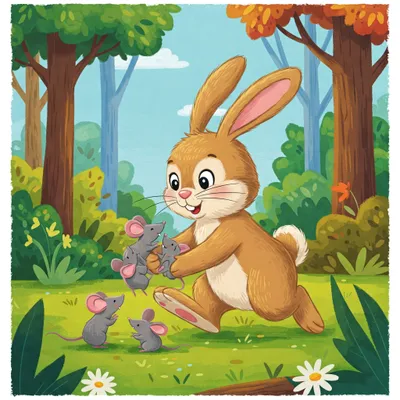
A bunny hops through the forest scooping up field mice and bopping them on the head. The Good Fairy gives three warnings, the bunny ignores all three, and gets turned into a "goon." The whole song builds toward its groan of a pun: "Hare today, goon tomorrow."
What is the origin of Little Bunny Foo Foo?
Unlike many traditional folk rhymes with centuries-old roots, "Little Bunny Foo Foo" is distinctly modern, emerging as a children's poem and song in the mid-to-late twentieth century within the United States. The earliest documented references place its existence around 1970, with Beverly Cleary's children's novel Runaway Ralph mentioning a character hearing a song called "Little Rabbit Fru-Fru" at summer camp, and a January 1970 issue of The New Yorker referring to "Little Bunny Phoo Phoo." These early mentions suggest the rhyme was primarily transmitted through informal childlore, particularly in settings like summer camps. The melody used for singing the verses is borrowed from the French-Canadian children's song "Alouette" (1879).
What is the moral of the story in Little Bunny Foo Foo?
Most commonly, the song is interpreted as a straightforward cautionary tale about behavior, consequences, and the misuse of power. The moral message is that aggressive actions directed toward those smaller or weaker (the field mice) will not be tolerated and will result in punishment administered by a moral authority (the Good Fairy). The consequence itself, being turned into a "goon," remains somewhat ambiguous. Different interpretations suggest it might mean becoming a bully or thug, a simpleton, or a troll-like figure, while many believe the term primarily serves the concluding pun: "Hare today, goon tomorrow."
What are the common variations of the rhyme?
Like many folk rhymes, "Little Bunny Foo Foo" exists in several variations. One significant alternative replaces "bopping" the mice with "kissing" them, shifting the tone from mild physical conflict to perhaps unwanted affection. Other narrative variations include the bunny moving from bopping mice to bopping other animals after being warned, suggesting a lesson about specific instructions. Cori Doerrfeld's picture book Little Bunny Foo Foo: The Real Story offers a revisionist take where the mice had stolen the bunny's desserts, providing justification for the bopping.
Music Video
If the player is unavailable, watch this video on YouTube.
Related Nursery Rhymes

Lyrics from nurseryrhymes.info