

Cockles and Mussels (Molly Malone)


Lyrics
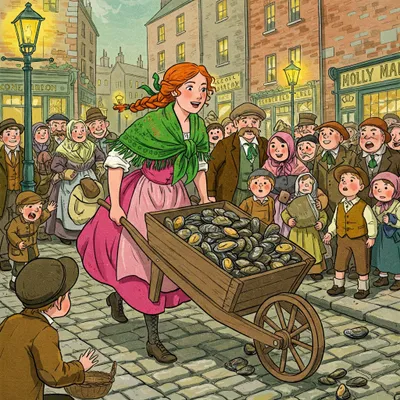
In Dublin's fair city,Where the girls are so pretty,I first set my eyes on sweet Molly Malone,As she wheeled her wheel-barrow,Through streets broad and narrow,Crying, "Cockles and mussels, alive, alive, oh!"
Chorus:Alive, alive, oh,Alive, alive, oh,Crying, "Cockles and mussels, alive, alive, oh!"
She was a fishmonger,But sure 'twas no wonder,For so were her father and mother before,And they each wheeled their barrow,Through streets broad and narrow,Crying, "Cockles and mussels, alive, alive, oh!"
Chorus
She died of a fever,And no one could save her,And that was the end of sweet Molly Malone.But her ghost wheels her barrow,Through streets broad and narrow,Crying, "Cockles and mussels, alive, alive, oh!"
History and Meaning
"Cockles and Mussels," also known as "Molly Malone," is a traditional Irish folk song and ballad. Frequently treated as the unofficial anthem of Dublin, the song tells a tragic story of a young street vendor selling seafood.
Origins
Although widely regarded as a centuries-old piece of Irish folklore, the song has a documented publishing history starting in the late nineteenth century. A version of the ballad was first published in Boston, Massachusetts, in 1876. The song was later published in London in 1883 with words and music attributed to Scottish composer James Yorkston. It is cataloged under number 1693 in the Roud Folk Song Index. In 1988, a bronze statue of Molly Malone was erected in Dublin to celebrate the city's millennium.
Meaning & Interpretation
The lyrics tell the story of Molly Malone, a beautiful young woman who works as a fishmonger. She wheels a barrow through the narrow streets of Dublin, selling fresh cockles and mussels. The narrative takes a tragic turn in the third verse when Molly dies of a fever. The song concludes with her ghost continuing to push her wheelbarrow and call out her trade through the city streets.
Historians debate whether Molly Malone was a real person, but she is generally viewed as a representative figure for the many poor street vendors who faced difficult living conditions in Victorian Dublin. The song combines a catchy, repetitive chorus with a melancholic narrative, preserving the memory of historical working-class life in Ireland.
Who was Molly Malone?
While some researchers suggest a historical woman named Molly Malone lived in Dublin in the seventeenth century, she is widely considered a legendary composite figure representing Dublin's historical street vendors.
What is the history behind Cockles and Mussels?
The song is a traditional Irish ballad first published in Boston in 1876 and later in London in 1883. It became an unofficial anthem of Dublin and was commemorated with a public statue in 1988.
Music Video
If the player is unavailable, watch this video on YouTube.
Lyrics from nurseryrhymes.info