
Clap Hands

Lyrics
Clap hands, clap hands,Till Daddy comes home;For Daddy's got money,But Mummy's got none.
Clap hands, clap hands,Till Daddy comes home;For Daddy's got money,And Mummy has a bun.
History and Meaning
"Clap Hands" is a traditional English-language nursery rhyme and hand-clapping game. Used for centuries to entertain babies and toddlers, the simple, rhythmic chant is one of the oldest recorded play activities in the English-speaking world.
Origins
The exact origin date of the rhyme is unknown, as it was passed down through generations in the oral traditions of Ireland, Scotland, and England. The rhyme is cataloged as a traditional folk poem, and its longevity is due to its natural, engaging rhythm. Clapping games like "Pat-a-Cake" were recorded in Europe as early as 1698, and "Clap Hands" likely developed during the same period. In the twentieth century, popular music bands adapted the familiar phrase, such as the 1938 recording by Al Donahue and Paula Kelly, though the children's folk rhyme predates these commercial versions by generations.
Meaning & Interpretation
On a literal level, the chant is a simple bedtime routine song about a child waiting for their father to return home from work. However, the line "For father's got money, but mother's got none" is often highlighted by social historians as a reflection of the historical legal doctrine of coverture. Under this legal system, which existed in Britain and North America in the eighteenth and nineteenth centuries, a married woman's legal rights were subsumed by those of her husband, meaning she had no independent right to own property or money.
The rhyme has maintained a strong cultural presence, famously quoted in Frank McCourt's Pulitzer Prize-winning memoir Angela's Ashes. Many families today sing updated versions, changing the lyrics to "Mummy's got money, and Daddy's got some" to reflect modern family structures.
What is the meaning behind the Clap Hands nursery rhyme?
The rhyme describes a baby waiting for their father's return. Historically, its contrast between the father having money and the mother having none reflected the legal realities of coverture, where married women could not independently own property.
How is the Clap Hands game played?
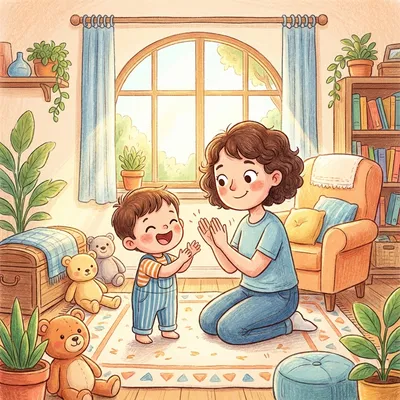
To play, a caregiver holds a baby's hands and gently claps them together in time with the rhythm of the chant, helping the child develop physical coordination and a sense of timing.
Related Nursery Rhymes
Lyrics from nurseryrhymes.info