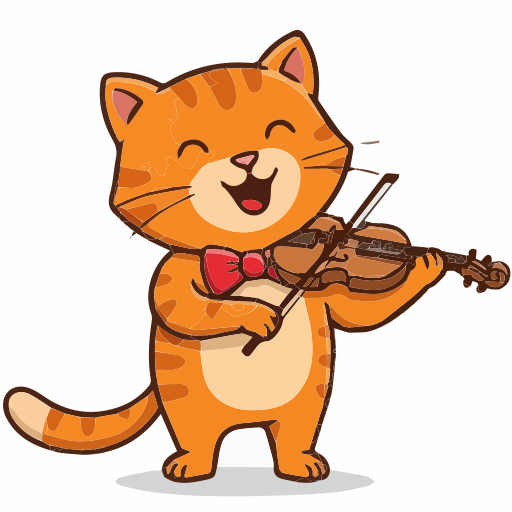

Buffalo Gals
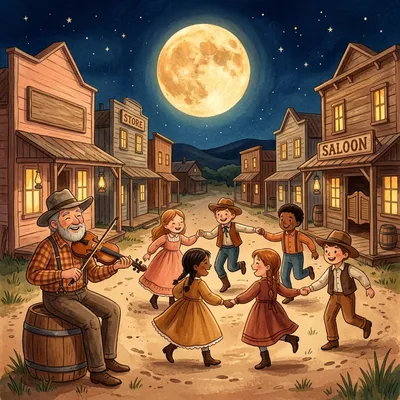


Lyrics
Buffalo gals, won't you come out tonight,Won't you come out tonight,Won't you come out tonight?Buffalo gals, won't you come out tonight,And dance by the light of the moon?
History and Meaning
Most people recognize the melody of "Buffalo Gals" not from nineteenth-century sheet music, but from the 1946 film It's a Wonderful Life. In the scene where George Bailey offers to lasso the moon for Mary Hatch, the couple sings this tune. That cinematic moment cemented the song in the public imagination as a romantic, whimsical duet. However, the song's actual origins are rooted in the blackface minstrel shows of the mid-nineteenth century, a context that is often overlooked in modern retellings. While the lyrics sung today are simple and harmless, the performance tradition from which they emerged was built on racial caricature. Understanding this distinction helps parents navigate the song's complex history.
The song was published in 1844 under the title "Lubly Fan." It was written by John Hodges, who performed under the stage name "Cool White." Hodges was a prominent figure in the early minstrel circuit. The original publication date places the song at the height of minstrelsy's popularity in the United States. Although the 1844 publication is the first documented record, folklore suggests the melody and structure may have existed in oral tradition prior to that date. The song survived the decline of minstrelsy to become a staple of square dancing and play-parties in the twentieth century.
Origins
The documented history of the song begins with its 1844 publication as "Lubly Fan." John Hodges, performing as "Cool White," released the sheet music during a period when minstrel shows were the dominant form of popular entertainment in America. These shows featured white performers in blackface makeup, caricaturing Black people through exaggerated dialects, costumes, and behaviors. The song emerged directly from this tradition.
Minstrel performers frequently adapted songs to suit their local audiences. They would change the location name in the title to match the city or town where they were currently playing. This practice produced numerous regional variants, including "New York Gals," "Boston Gals," and "Alabama Girls." The version titled "Buffalo Gals" simply happened to be the one that persisted in popular culture. There is no evidence that the song was specifically about Buffalo, New York, or that it held any unique significance to that location compared to the other variants. It was a template song, designed to be flexible and locally relevant for touring troupes.
Meaning
The standard text sung today is an ordinary dance and courting song. The lyrics invite women to leave their homes and dance under the moonlight. There is no complex allegory or hidden political message in the surviving words. The invitation is straightforward and social.
The problem with the song lies not in the text itself, but in the performance tradition it came from. In the context of the minstrel show, the song was performed by white actors in blackface, often accompanied by banjo or fiddle, as part of a routine that mocked Black culture and relationships. The humor and appeal for nineteenth-century audiences were derived from the racial stereotypes presented on stage. When the song is sung today as a square dance tune or a romantic duet, those racial elements are absent. The distinction is important: the words are benign, but the tradition that carried them was not. Parents should be aware that while the lyrics are safe, the song's heritage is tied to a system of racial exploitation.
Why is it called Buffalo Gals?
The title is not unique to Buffalo. Minstrel performers changed the name of the song to match the city they were visiting. If they were in Boston, it was "Boston Gals." If they were in Alabama, it was "Alabama Girls." "Buffalo Gals" is simply the version that became the most widely known and recorded. It did not originate in Buffalo, nor was it specifically about women from Buffalo. It was a placeholder title that stuck.
Is it safe to sing with children?
The lyrics themselves are safe. They contain no violence, sexual content, or offensive language. The song is a simple invitation to dance. However, parents should be aware of its origins in blackface minstrelsy. If you choose to sing it, it is helpful to acknowledge that the song comes from a historical tradition that was racist, even if the words you are singing today are not. This allows children to enjoy the melody while understanding the full historical context.
Where did I hear this song before?
You likely heard it in the 1946 movie It's a Wonderful Life. The scene where George and Mary sing the song while looking at the moon is iconic. This usage stripped the song of its minstrel context and repackaged it as a sweet, romantic moment. This cinematic association is the primary reason the song remains familiar to modern audiences, rather than its original popularity in the 1840s.
Related Nursery Rhymes


Lyrics from nurseryrhymes.info